Quick answer
Start with measurements, then check the route.
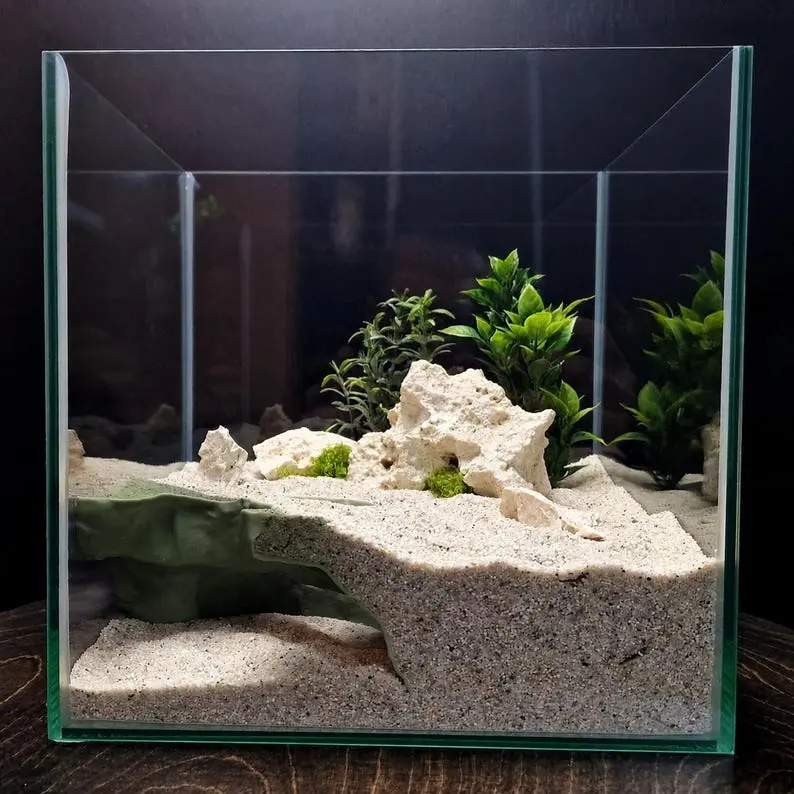
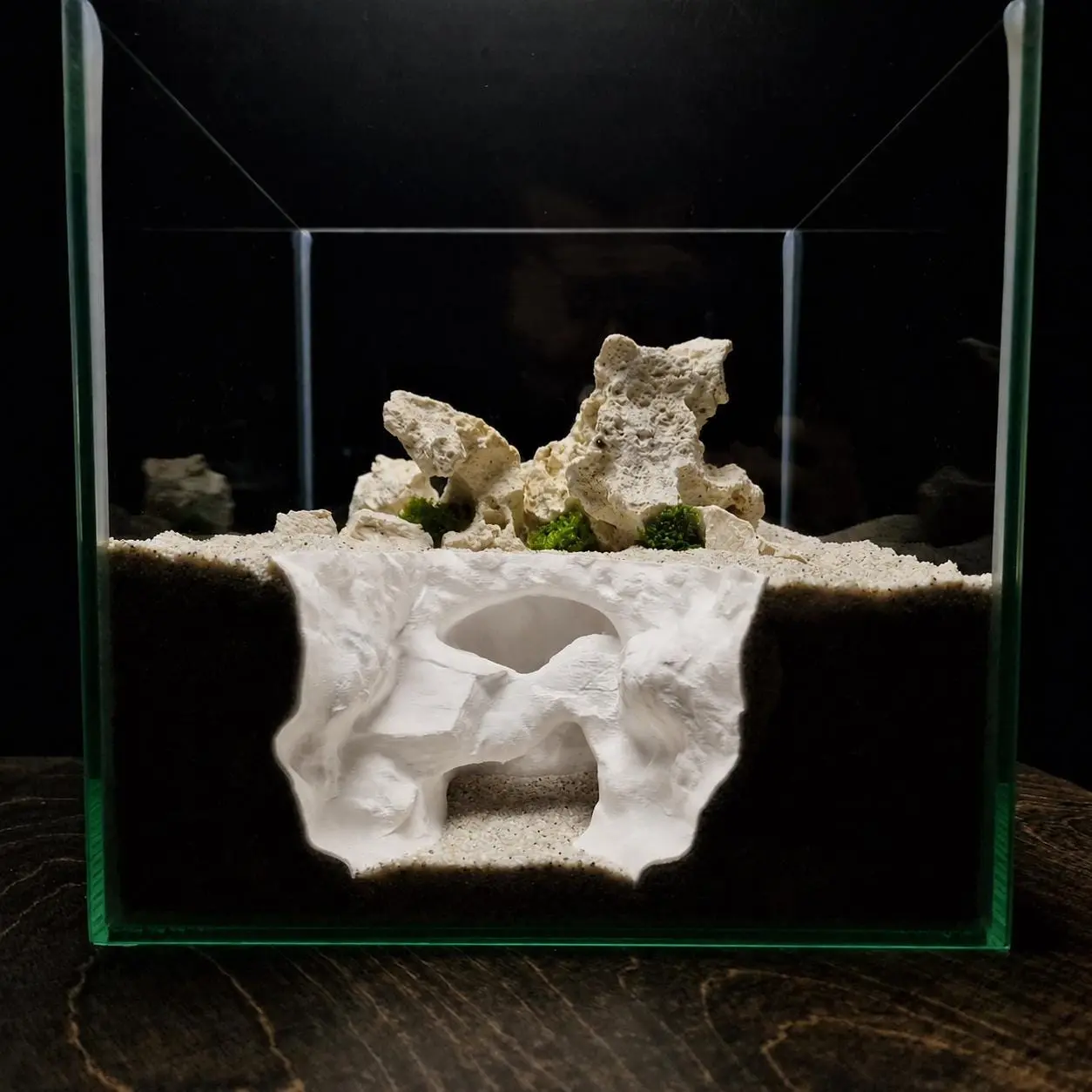
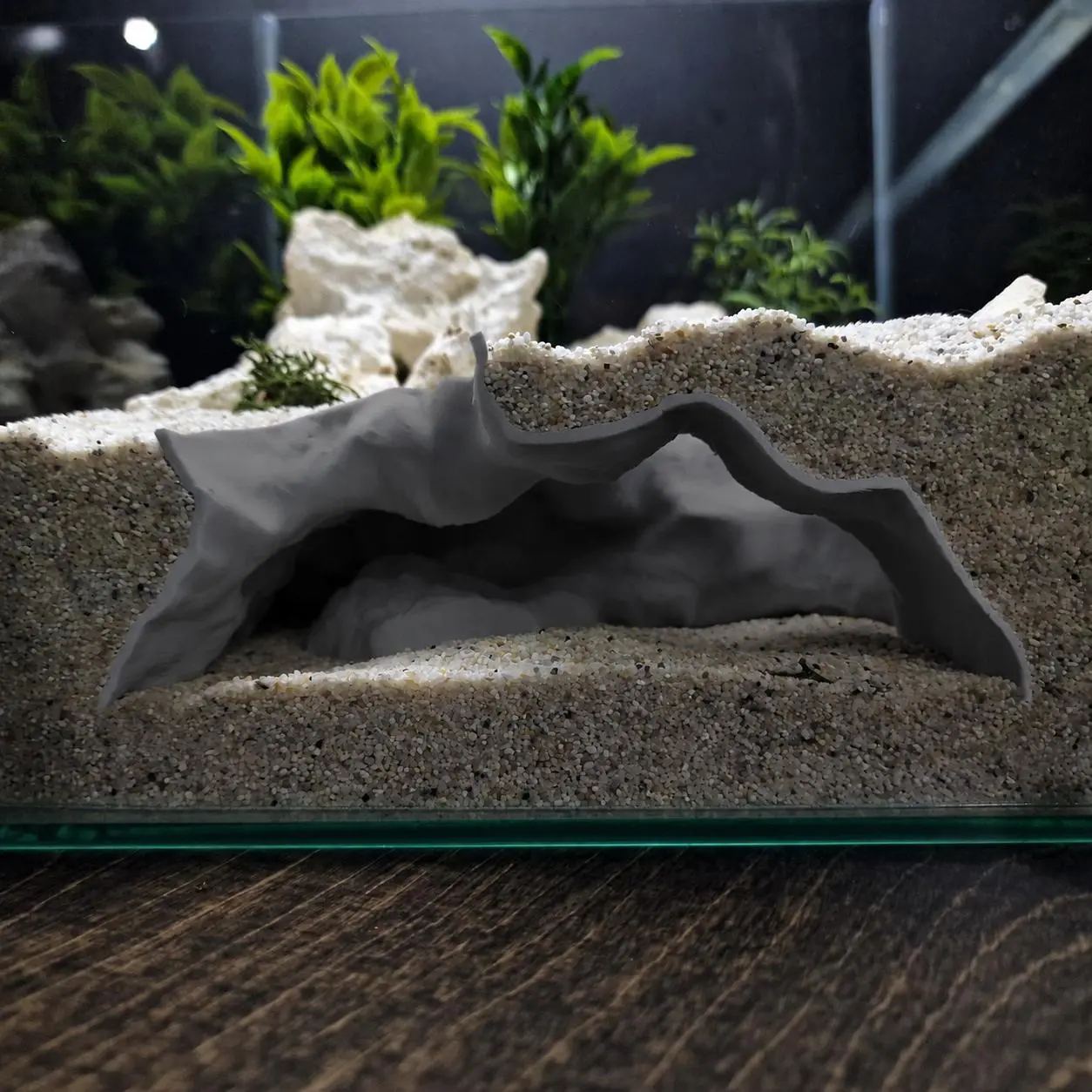
Choose a cave by comparing its actual dimensions and visible openings with your individual betta's adult body and full fins. Preserve a simple route back to the surface, place the shelter securely in a calm and inspectable area, and watch the first uses before treating any design as a permanent fit.
Measure the usable tank space, not only the gallons
Two aquariums with the same advertised capacity can have very different usable floor space. Substrate slopes, plants, wood, stone, equipment, and the distance between the hardscape and glass all affect where a cave can sit without crowding the tank.
Compare the product's full length, width, and height with the clear area where it will actually go. A paper template cut to the listed footprint is a simple way to check whether the cave leaves enough open swimming room and a practical route for your hand or cleaning tools.
Check the full outside length and width against the clear tank floor, including nearby plants and hardscape.
Allow room above the cave and preserve a straightforward route between the shelter and the water's surface.
Leave enough access to inspect the openings, remove debris, and lift the piece if the layout changes.
Prioritize visible entrances and comfortable fin clearance
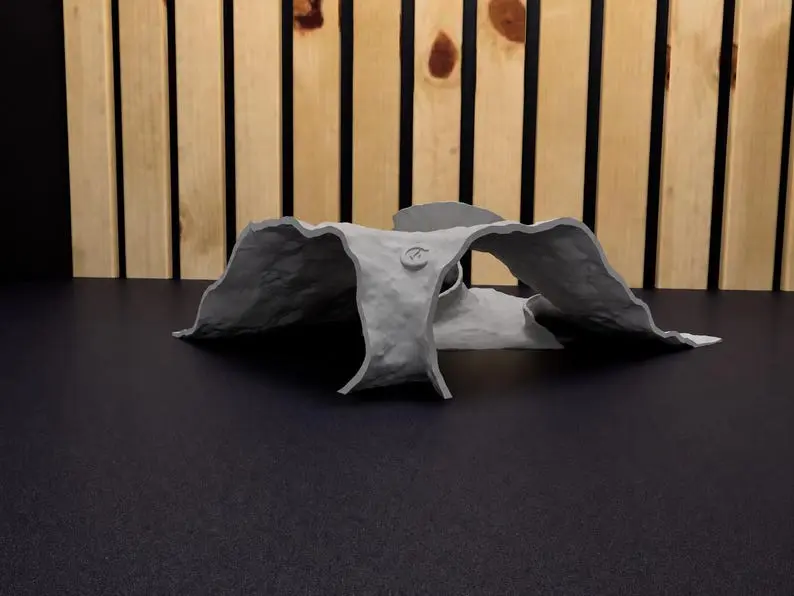
A product's outside dimensions do not automatically describe the size of every opening or curve inside it. Review all available product photos and avoid assuming that a model name or size label guarantees a swim-through for every fish.
The intended route should comfortably clear the betta's body and full fins without squeezing, scraping, or requiring an awkward turn. Keep the entrance visible instead of facing it into glass, a rock, or dense plant growth that could narrow the route later.
Plan a calm placement with an open route to the surface
Bettas regularly return to the surface, so a sheltered area should not sit behind a maze of tight obstacles. A calm planted zone can help the cave feel integrated, provided the fish still has a simple way to enter, exit, and reach open water.
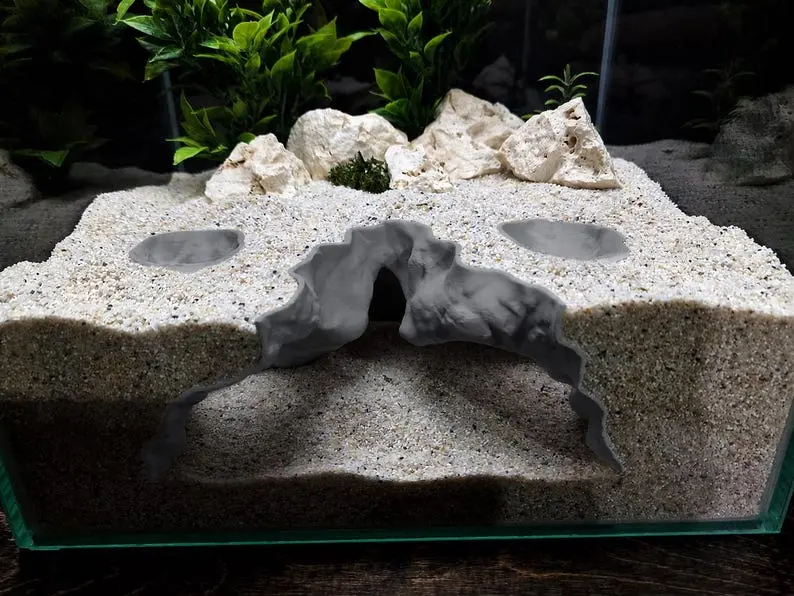
Set the cave on a stable base and make surrounding rocks independently secure. Avoid forcing the piece tightly against glass or burying an entrance beneath shifting substrate. The finished arrangement should be easy to inspect from at least one normal viewing angle.
Compare a low retreat with a multi-opening cave
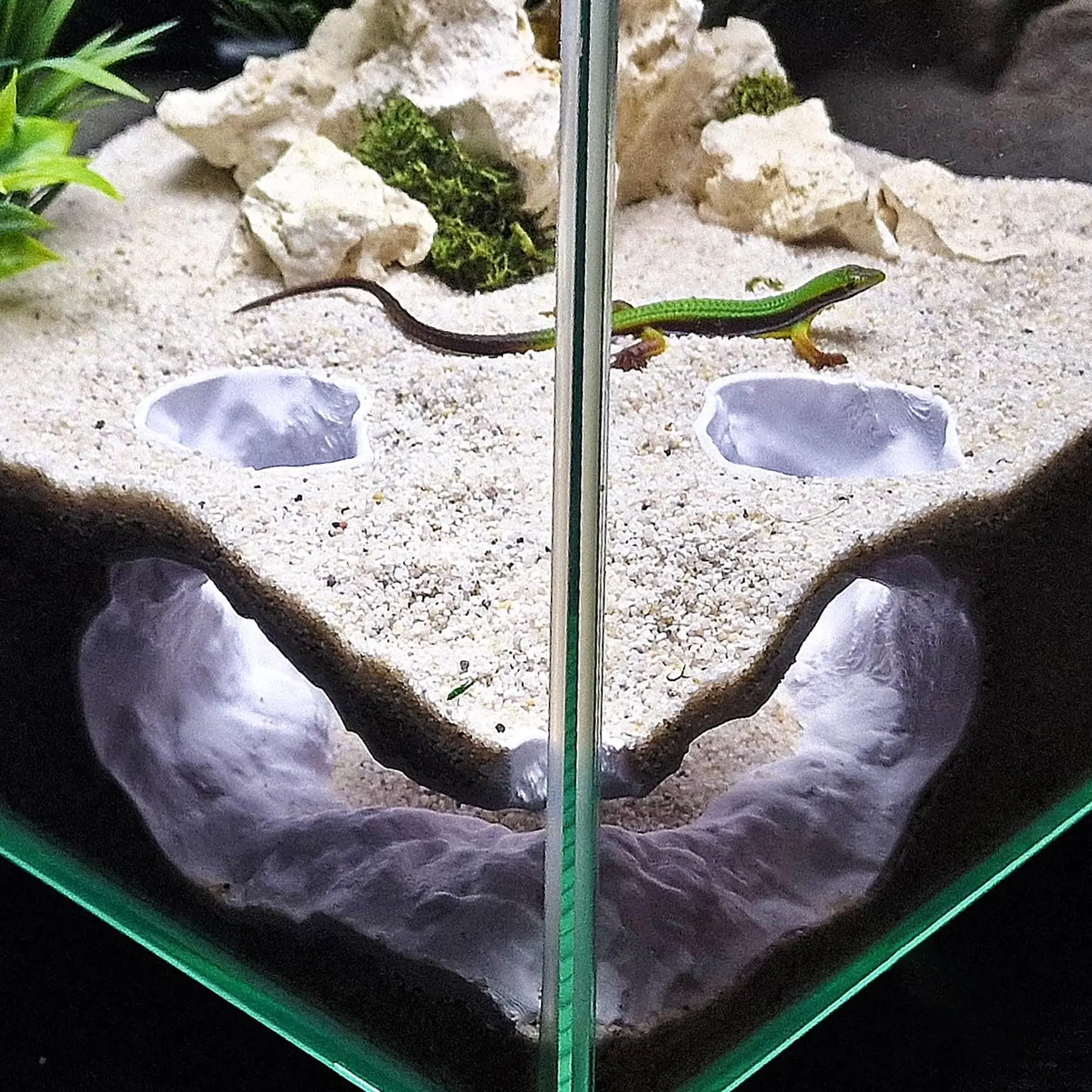
A low-profile shelter can preserve the visual openness of the tank, while a multi-opening form can create more than one visible route. Neither shape is automatically better. The right choice depends on the individual fish, the available footprint, and how the surrounding aquascape affects each entrance.
If the tank already contains dense plants or complex hardscape, a simpler open-front or low-profile cave may be easier to monitor. In a more open layout, a sculpted multi-opening design can add terrain without making every sheltered area depend on a single route.
Observe the first uses and keep the shelter maintainable
Rinse new décor with clean water, position it securely, and watch how your betta approaches and leaves the space. Normal curiosity is different from repeated hesitation, fin contact, difficulty turning, or a route that becomes blocked by substrate or plant growth.
Recheck the cave during routine maintenance. Remove or reposition any decoration that shifts, becomes damaged, develops sharp edges, traps unreachable debris, or interferes with normal swimming, feeding, resting, or surface access.