Quick answer
Start with measurements, then check the route.
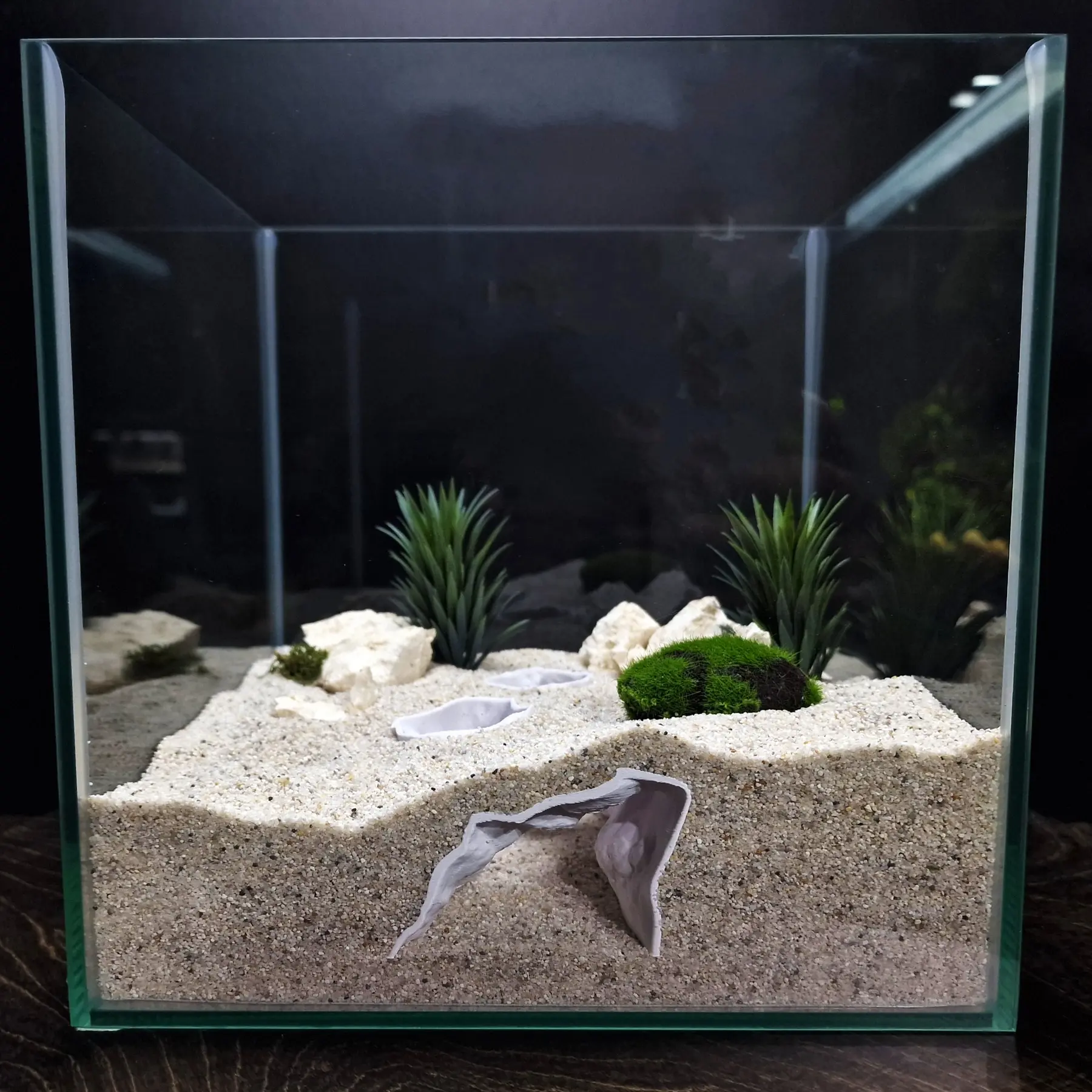
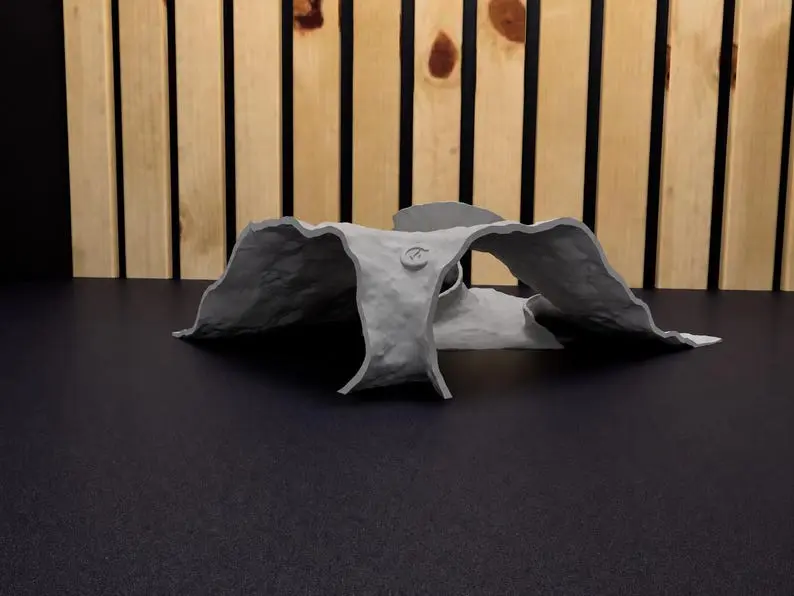
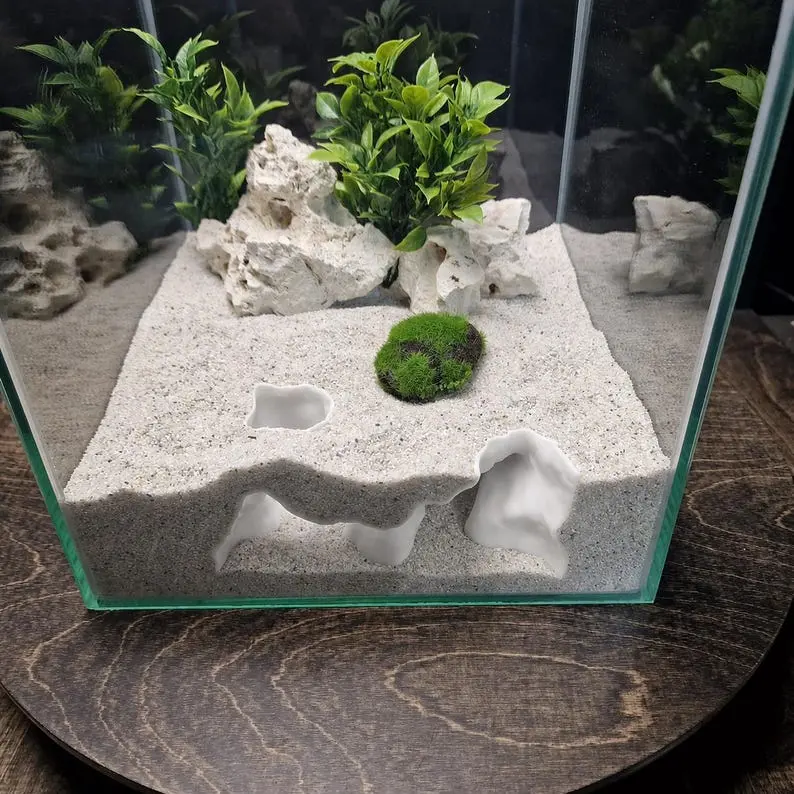
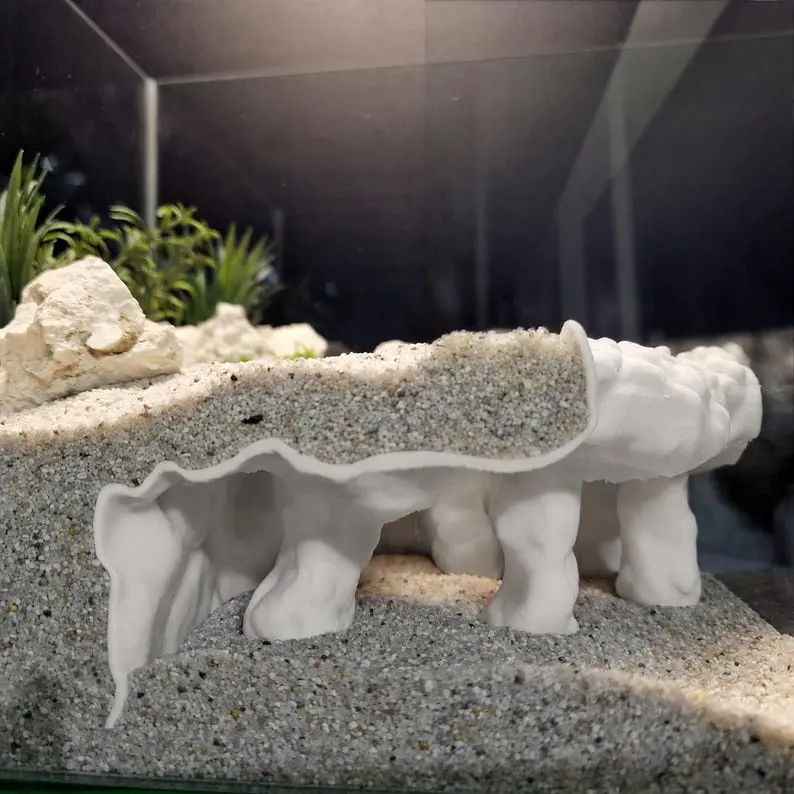
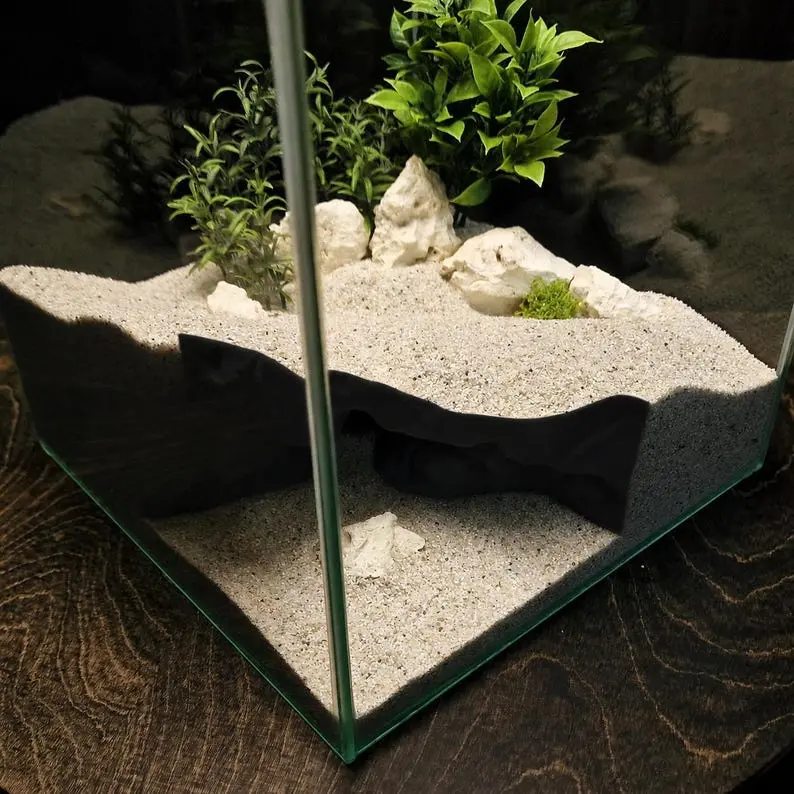
Set the cave on a stable base, keep every intended entrance visible, and preserve open routes to the rest of the tank. Place it where water can move around the structure and where you can inspect or remove it without rebuilding the entire aquascape.
Begin with a stable base
Decide where the cave will sit before building heavy stone or wood around it. The piece should rest securely and should not depend on loose substrate alone to keep it from rocking. Digging animals, current, routine cleaning, and bumps from maintenance tools can all test an unstable layout.
Do not wedge the cave tightly against glass or support heavy hardscape on top unless the full arrangement is independently stable. If the decoration must be removed, nearby rocks should not collapse into the space it leaves behind.
Keep entrances and travel routes open
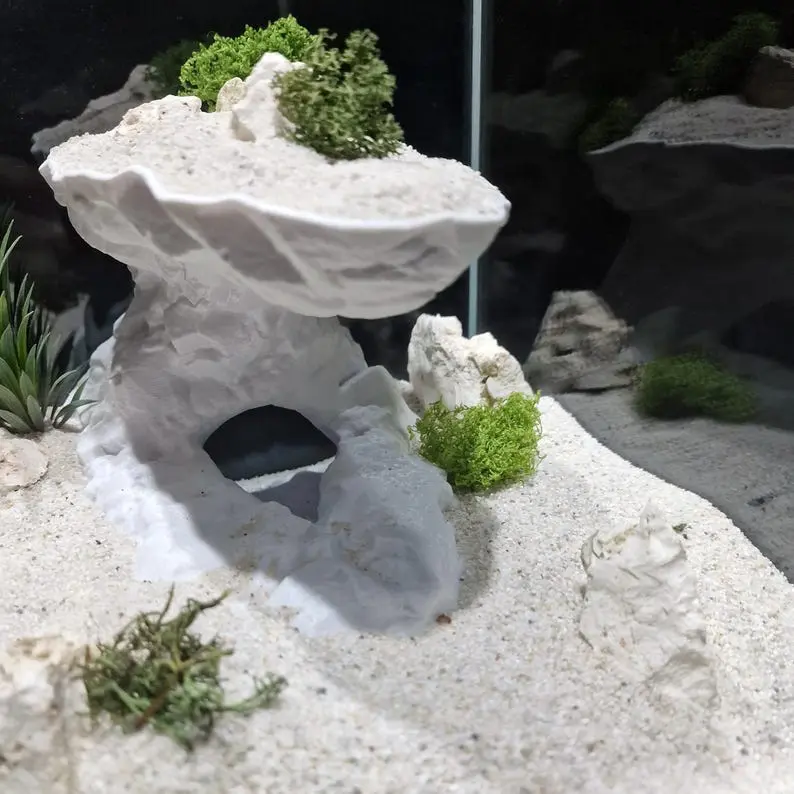
Use plants and substrate to soften the outline, but do not disguise an entrance so completely that it becomes difficult to inspect. A clear route in and out is especially important for buried tunnels and designs with several connected openings.
Look at the layout from the animal's level as well as from above. A route that appears open from the front glass may be pinched by a stone, dense plant growth, or a steep substrate bank on the far side.
Useful for viewing and inspection, provided the cave is not pressed tightly against the glass.
Can create a quieter shelter while plants help the form feel integrated.
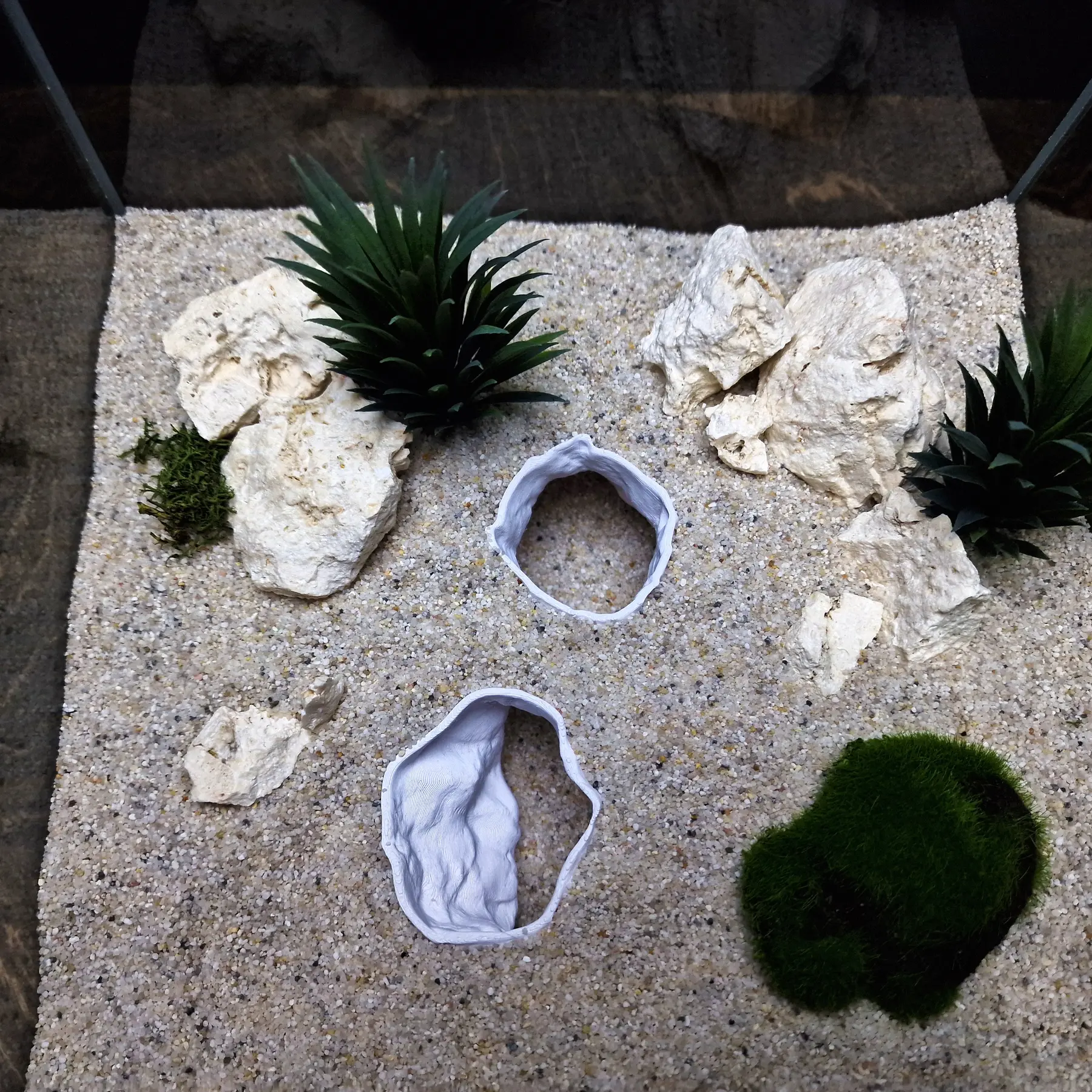
Can preserve foreground swimming space, but only if the cave remains accessible for cleaning and checks.
Plan for flow and debris
Large, solid forms can create calm areas, while narrow gaps behind décor can collect waste. Observe how food particles and plant debris move after placement. If material consistently gathers where you cannot reach it, adjust the angle or leave a larger service gap.
Avoid aiming a strong outlet directly into a resting space, but do not create a sealed pocket with no practical way to inspect or clean it. The best position balances shelter with maintainable circulation around the wider aquascape.
Test the layout before finishing it
Build the main arrangement, step back, and check each entrance, open swimming lane, and maintenance route before adding final plants or decorative stones. A quick photo from the front and above can reveal crowded areas that are harder to notice while your hands are in the tank.
After livestock returns, monitor use and stability. Reposition the piece if it shifts, blocks normal movement, collects unreachable debris, or makes routine care unnecessarily difficult.