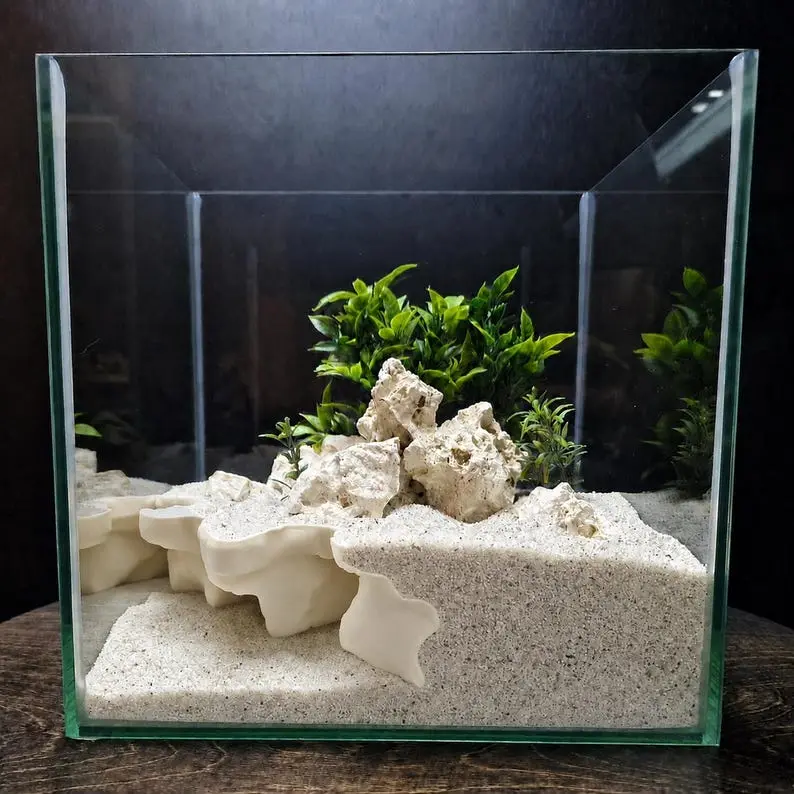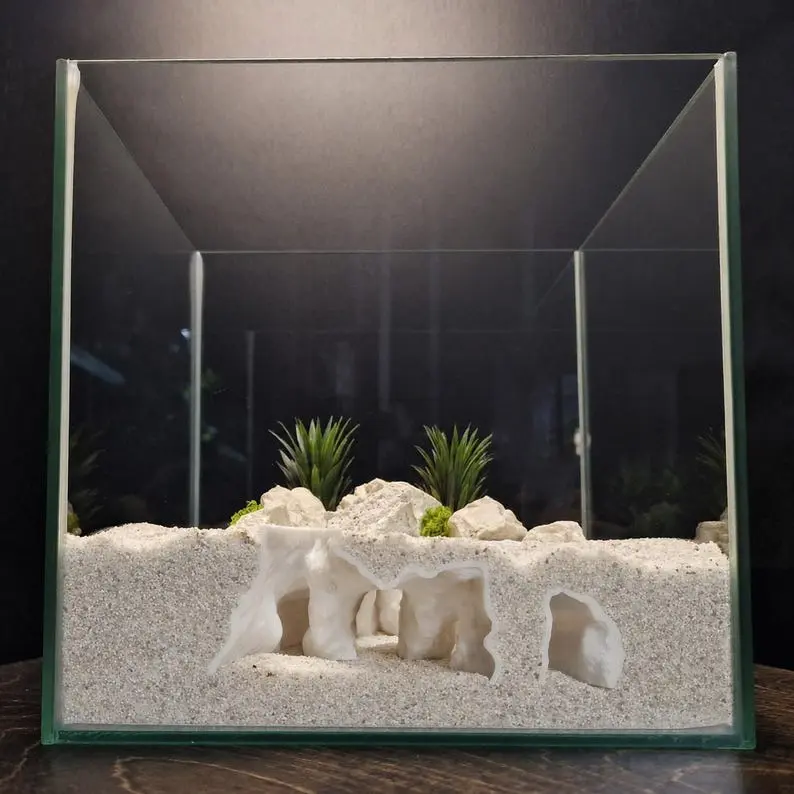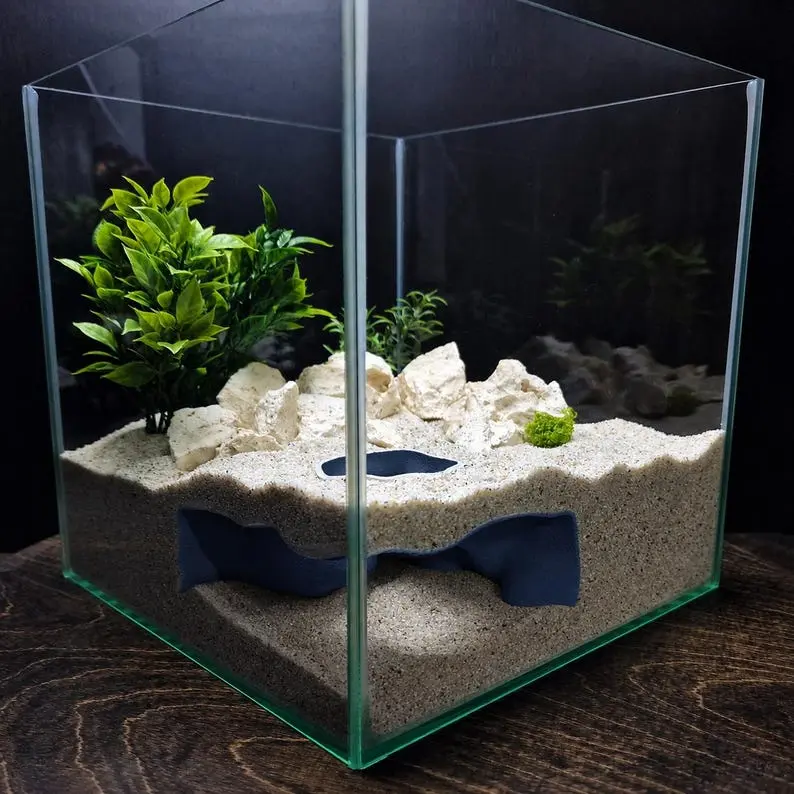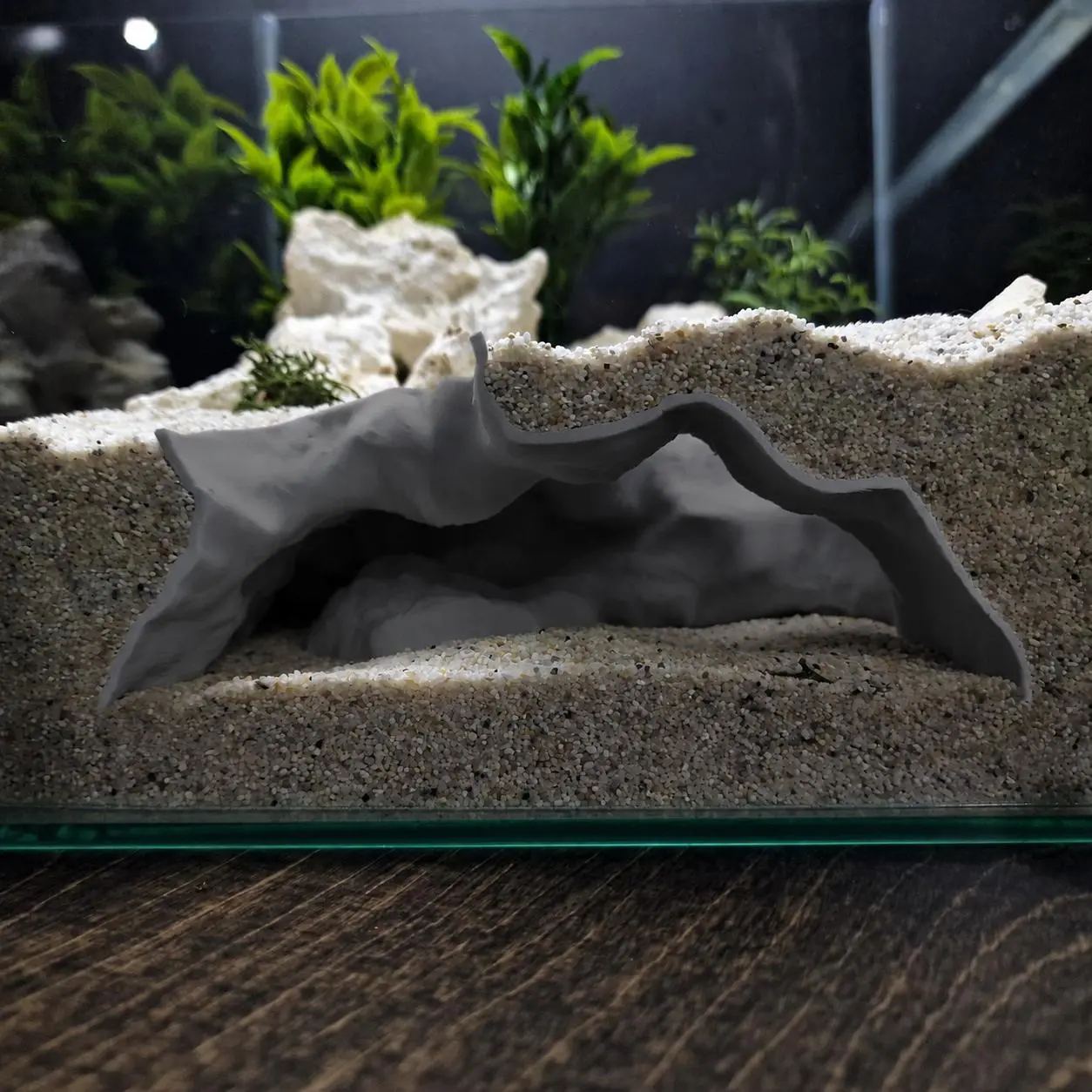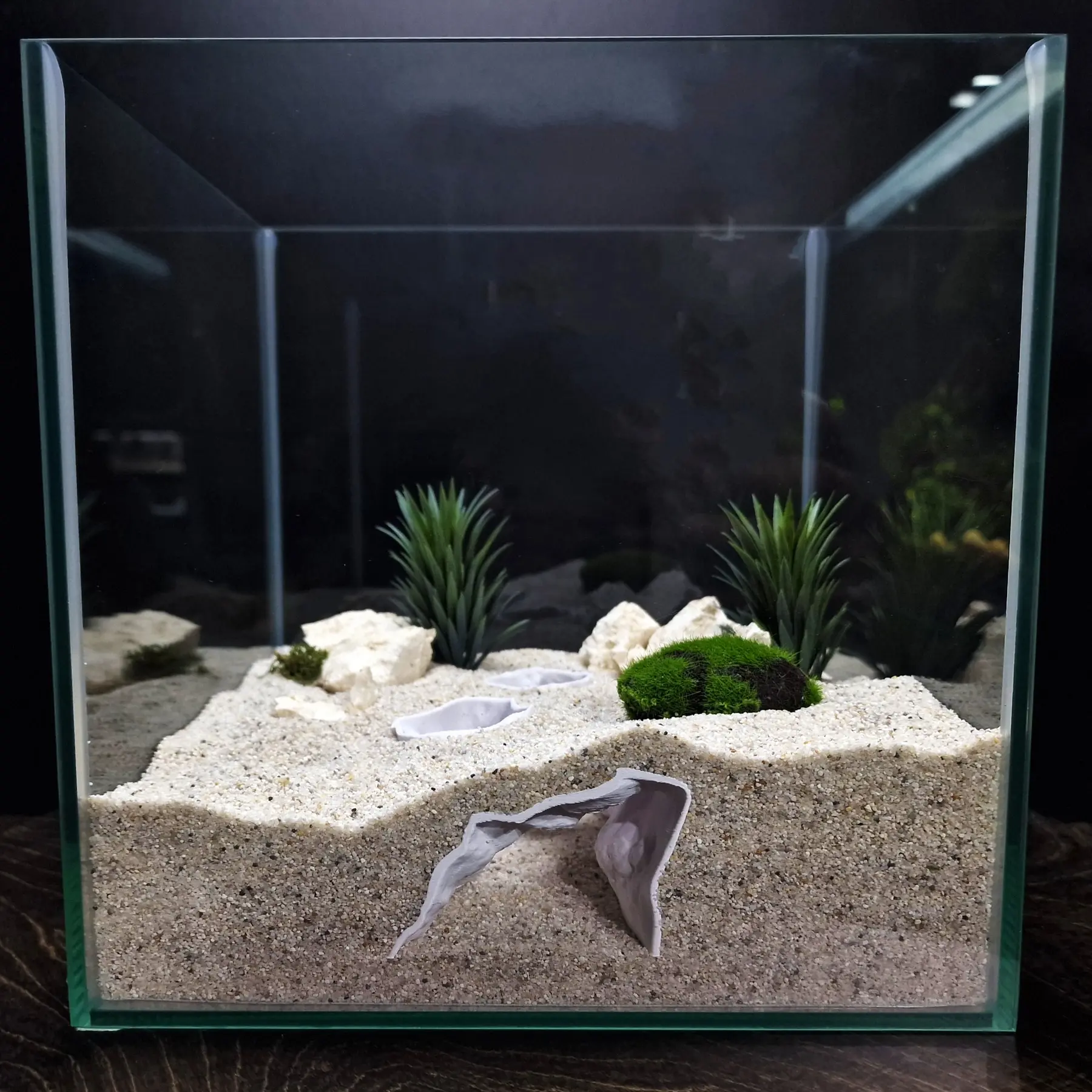
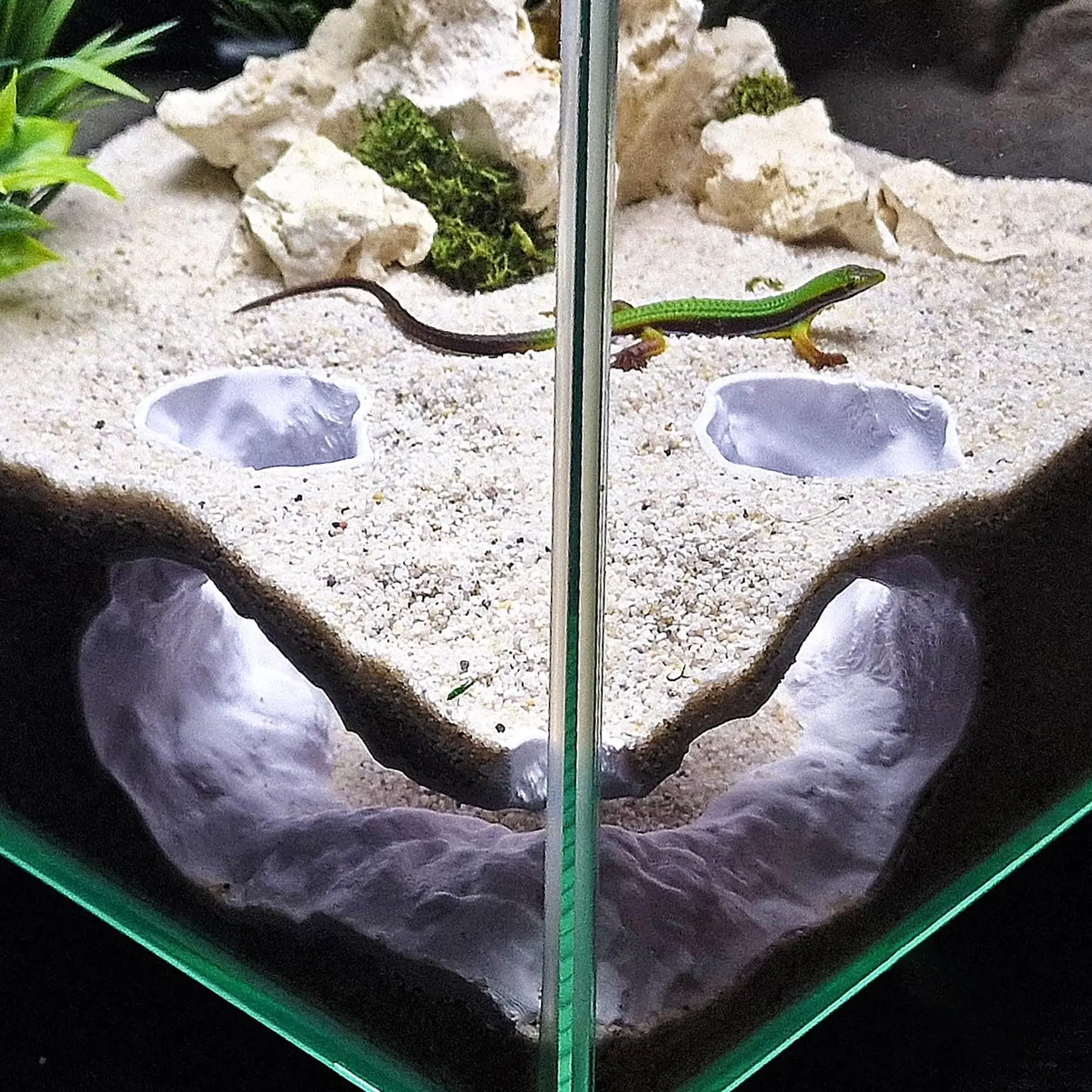
Quick answer
Start with measurements, then check the route.
Plecos vary too widely for one universal cave size. Start with the species' expected adult body length, width, and profile, then compare those needs with the product's actual outside dimensions and visible openings. Choose a stable, inspectable placement with surrounding flow and extra clearance whenever the fit looks close.
Begin with the specific pleco's expected adult size
Plecos differ substantially in adult length, body width, head shape, fin profile, and behavior. A cave that is roomy for one species may be unsuitable for another, so use the individual fish and reliable adult-size information as the starting point rather than the words small, medium, or large.
Measure or estimate the fish's adult length and widest body area, then allow comfortable clearance around the intended route. If the animal is still growing or the numbers look close, shortlist a roomier design instead of treating the current juvenile size as permanent.
Compare the adult body length with the usable route, not only the decoration's outside length.
Account for the head, body depth, fins, and the space needed to enter without squeezing.
Plan for the expected adult animal and reassess the cave as the fish and aquascape change.
Separate outside dimensions from entrance and interior clearance
The published length, width, and height tell you how much tank space the complete piece occupies. They do not guarantee that every entrance or interior curve has the same clearance. Review all product photos and ask before ordering if a critical opening measurement is not shown.
Decide whether you need a shaded retreat, an open rock tunnel, or a complete pass-through. Those jobs have different clearance needs. A broad open shelter may be easier to inspect, while a more enclosed form can require closer attention to the entrance and internal route.
Choose a stable footprint and protect the entrance
Set the cave on a secure base and keep nearby rocks or wood independently stable. Digging, routine cleaning, water movement, and contact from a larger bottom-dwelling fish can expose weaknesses in a layout that only looked stable on the first day.
Do not press the cave tightly against the glass or point the entrance into a hard obstacle. Preserve a clear approach and enough surrounding space to see whether substrate, plants, or shifted hardscape have narrowed the route.
Preserve surrounding flow and cleaning access
Solid décor can create calm zones and narrow gaps where waste settles. Observe how debris moves around the proposed location and avoid building a pocket that cannot be reached with normal aquarium maintenance tools.
Leave room to inspect the cave, clean around it, and remove it without causing nearby hardscape to collapse. If waste repeatedly collects where it cannot be reached, change the angle or placement rather than relying on the cave to remain maintenance-free.
Monitor fit instead of treating the first choice as permanent
Watch the first uses and continue checking as the fish grows. Entry and exit should look controlled and unobstructed, without repeated squeezing, scraping, trapped fins, or difficulty turning where the design requires it.
Remove or replace a cave that becomes too small, unstable, damaged, sharp, or difficult to maintain. This guide creates a shortlist, not a species-specific breeding or fit guarantee; the individual pleco and aquarium must decide the final choice.