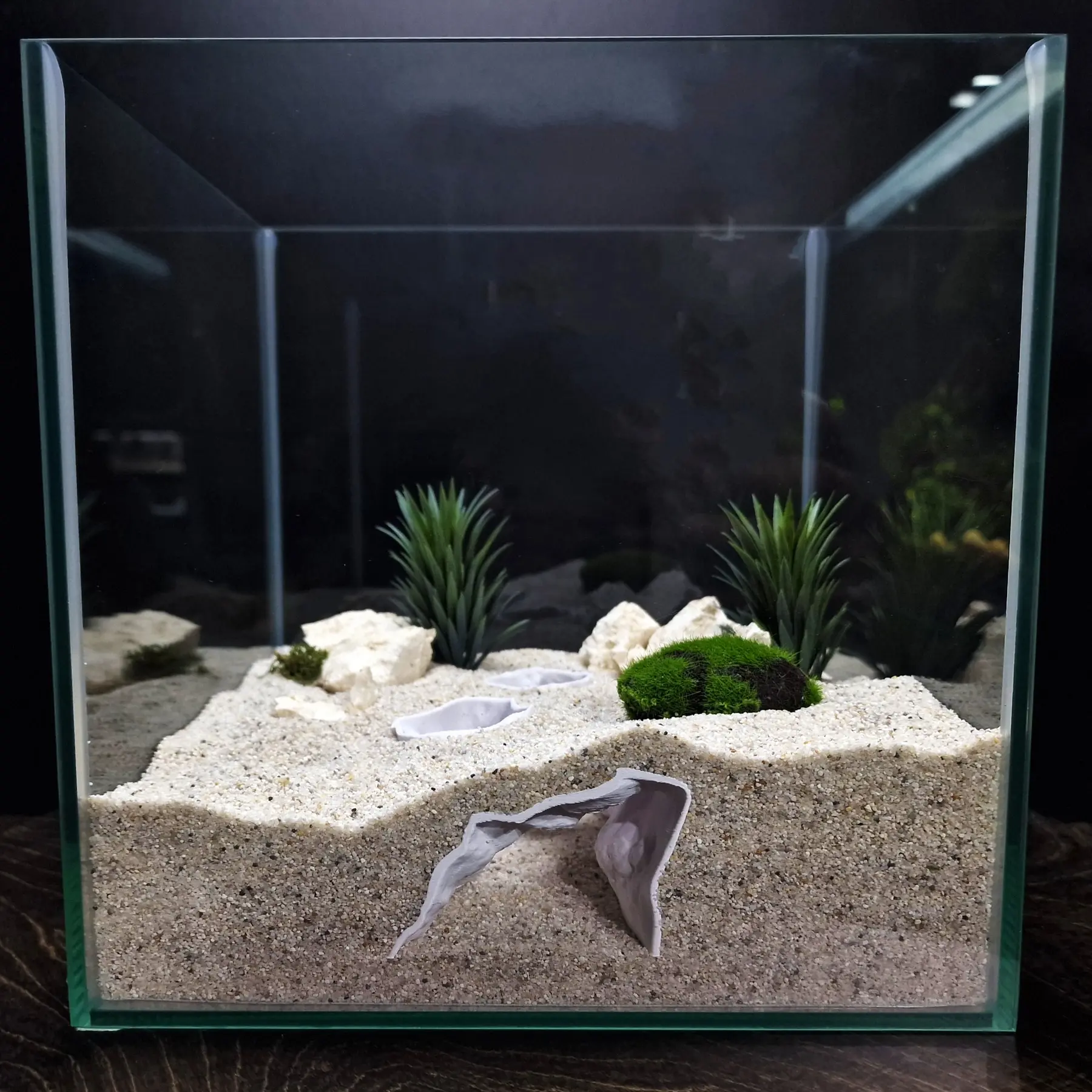
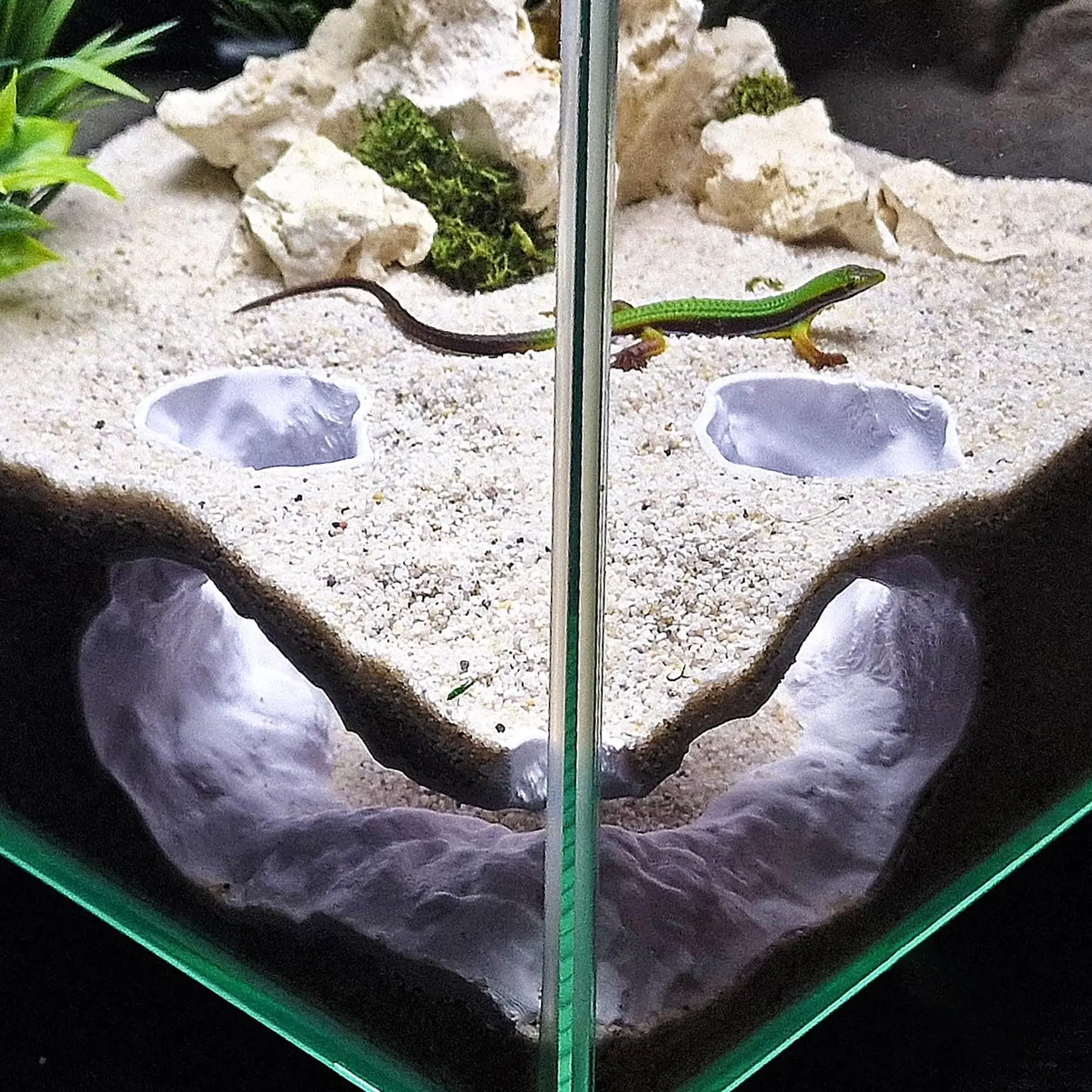
Quick answer
Start with measurements, then check the route.
Measure the available tank footprint and your animal at its expected adult size. Every intended entrance should comfortably clear the body and fins, with room to turn or pass through as the design requires. Product names such as small, medium, and large are only starting points; use the listed dimensions.
Measure three things before ordering
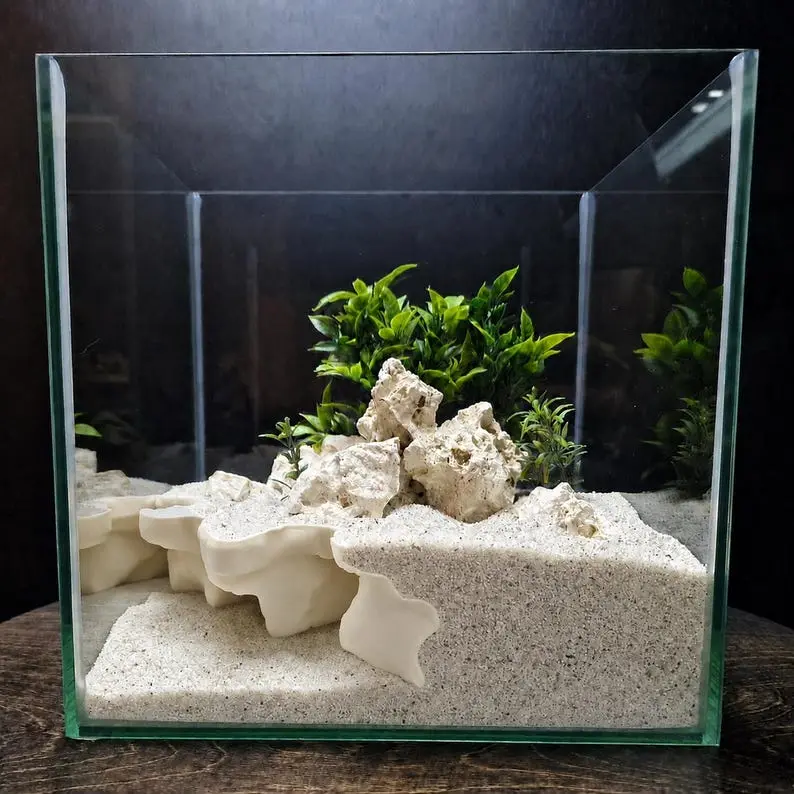
Start with the clear area where the cave will sit, not the aquarium's advertised gallon size. Substrate slopes, plants, wood, stones, filters, and glass clearance can make two tanks with the same capacity feel very different at floor level.
Next, compare the product's listed length, width, and height with that open area. Finally, consider your animal's full body shape at adult size, including fins, barbels, or a broad head. If an entrance or route looks close on paper, choose a roomier design or a different placement.
Mark the proposed area with a paper template so you can see how much swimming and maintenance space remains.
Use all three listed measurements. A low cave can still have a wide footprint, while a tall design may need extra glass or lid clearance.
Openings should comfortably clear the animal's body and fins without squeezing, scraping, or forcing an awkward turn.
An entrance measurement is not the whole interior
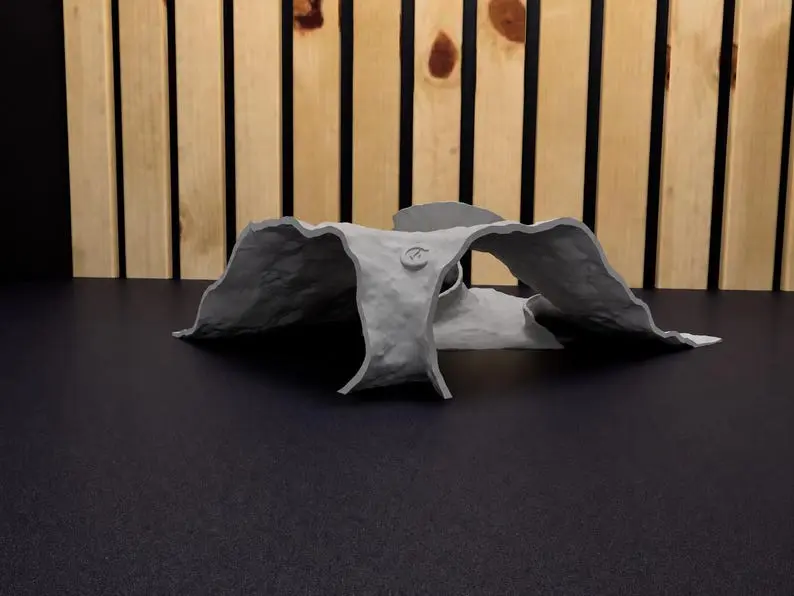
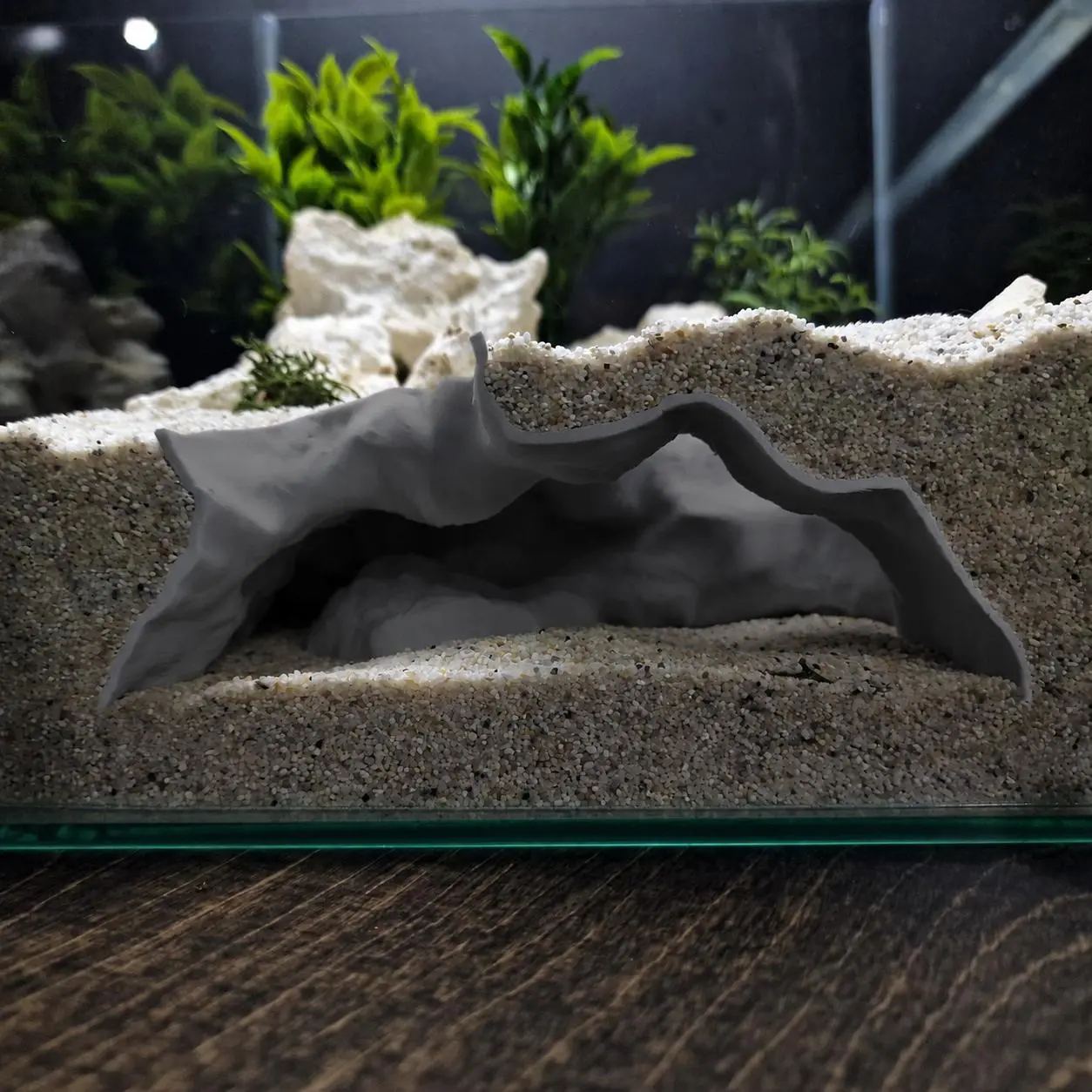
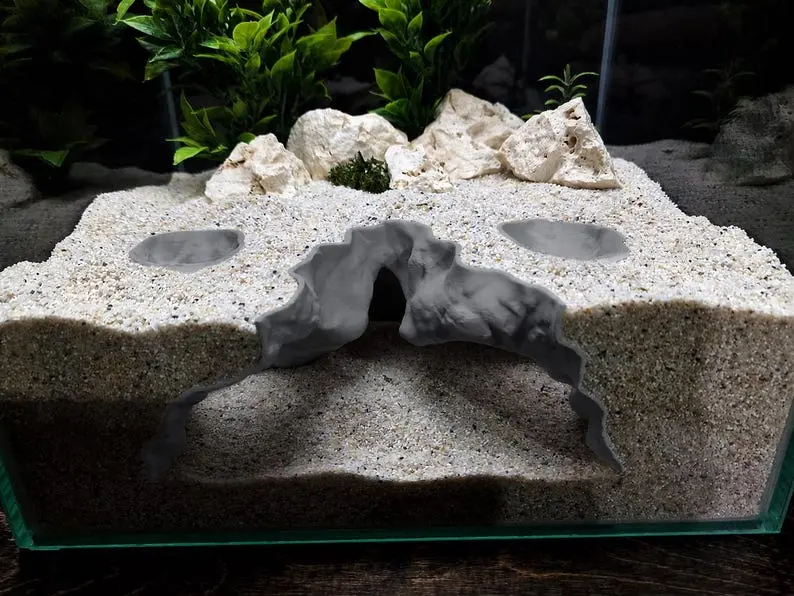
The outside footprint tells you whether a piece fits the aquascape, but it does not automatically describe every interior route. Multi-opening and under-gravel designs can narrow, curve, or change height inside. Look at all available photos and choose a form that matches how you expect the shelter to be used.
A sheltered resting nook and a complete swim-through have different clearance needs. If you need a passage, make sure there is a clearly visible exit and enough room along the route. If you need a retreat, preserve an unobstructed entrance and a simple way to inspect the space.
Allow for substrate and nearby hardscape
Under-gravel caves are meant to become part of the landscape, but their intended openings must stay exposed. Plan how deep the sand or gravel will be after it settles, and avoid placing loose rock where it could shift over an entrance.
Leave enough room around the piece for circulation, cleaning, and removal. A cave that technically fits but cannot be inspected without dismantling the tank is usually the wrong fit for that location.
Do a final fit and behavior check
Rinse the piece with clean water, place it securely, and inspect every intended opening before livestock approaches it. Watch the first uses. Normal exploration is different from repeated difficulty entering, turning, or exiting.
Animals and setups vary, so no chart can replace observation. Remove or reposition any decoration that causes crowding, traps debris, shifts, becomes damaged, develops sharp edges, or changes normal behavior.