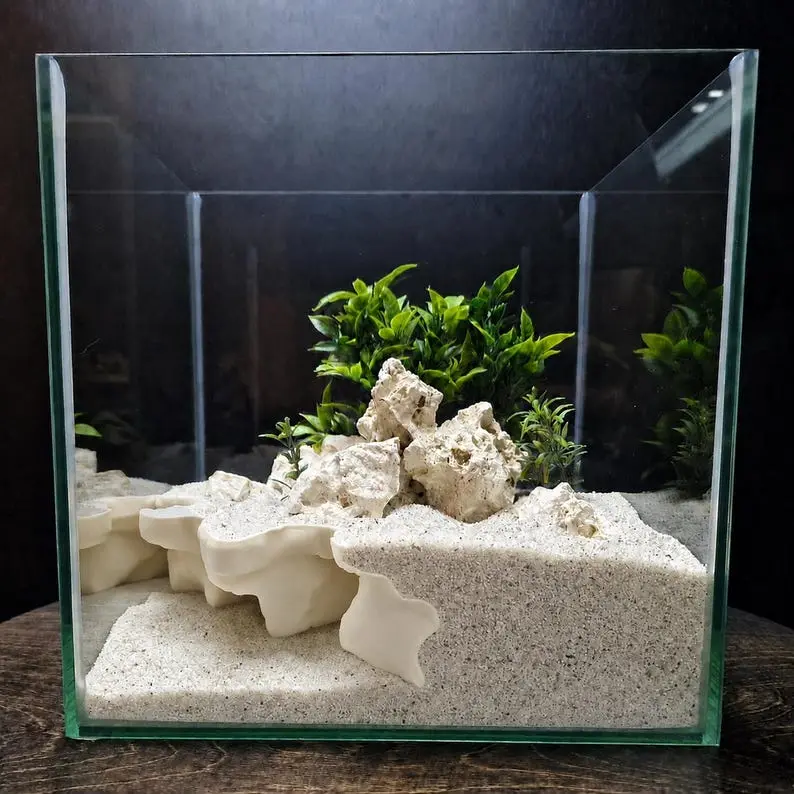
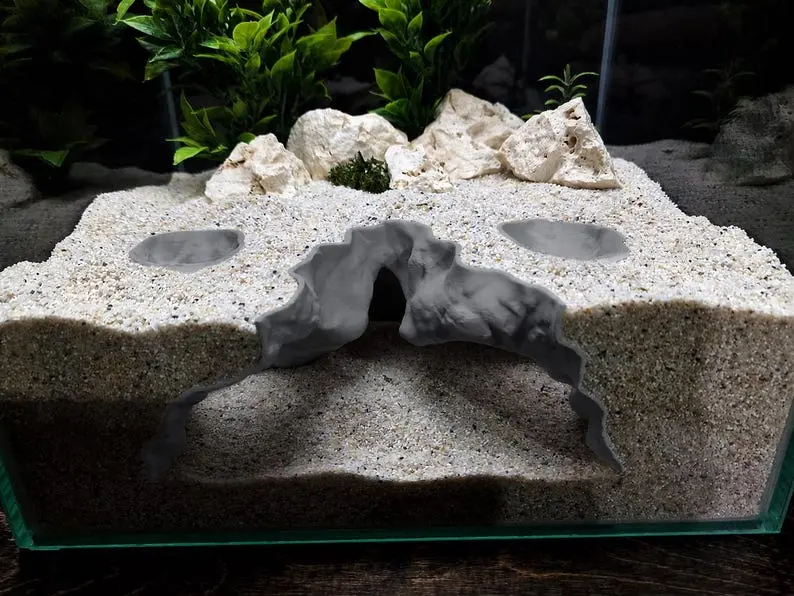
Quick answer
Start with measurements, then check the route.
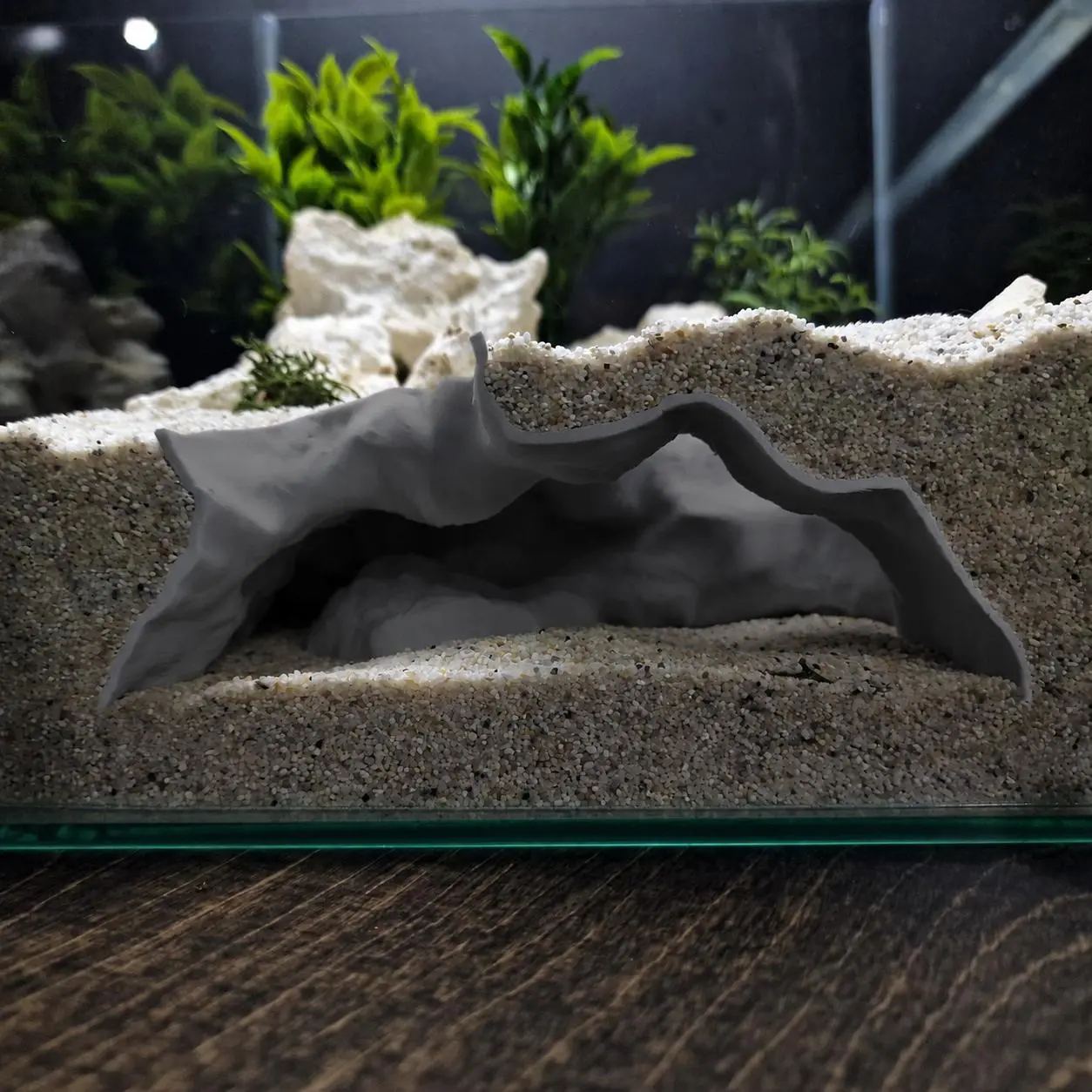
Choose one larger cave when a stable centerpiece and roomy shared structure suit the tank. Choose multiple smaller hides when you need shelter in separate zones or more than one independent entrance. The best plan preserves open swimming space, access for maintenance, and comfortable clearance for every animal.
When one larger cave works well
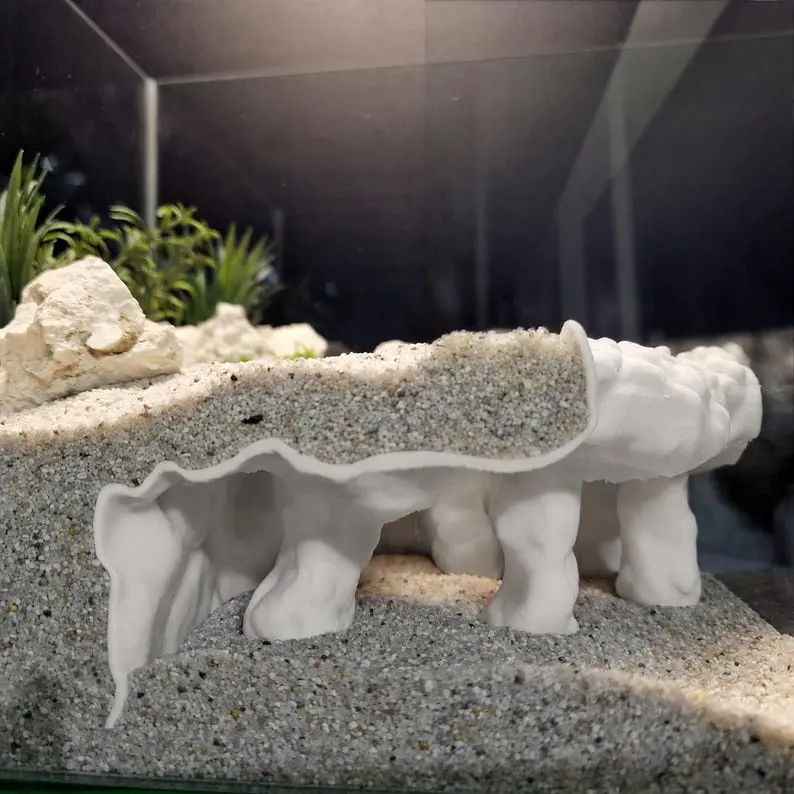
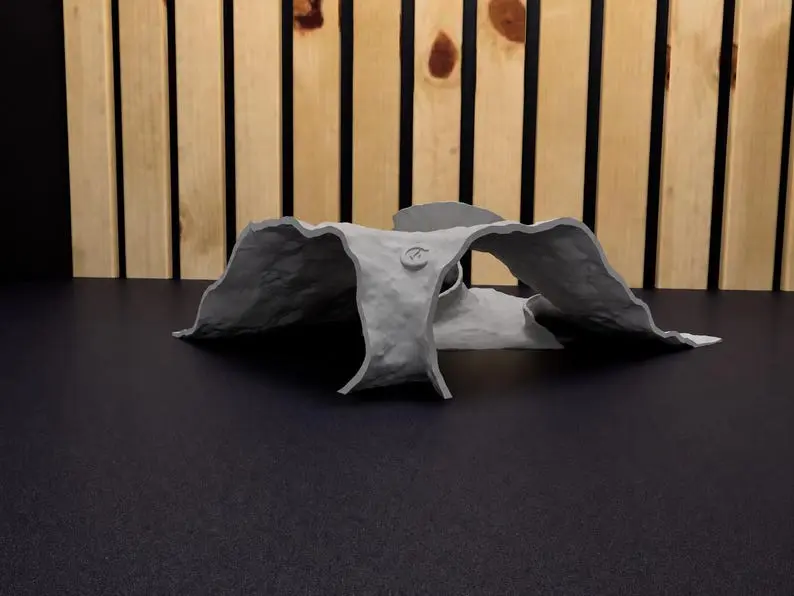
A larger cave can anchor the aquascape and combine shelter, terrain, and visual focus in one stable location. Open or multi-entrance designs may provide several routes while keeping the rest of the tank visually simple.
The tradeoff is footprint. Confirm that the piece leaves clear swimming lanes, does not pinch access along the glass, and can still be removed for inspection. One structure should not become the only route through a crowded part of the tank.
A planned centerpiece, a broad terrain feature, or a layout where one stable structure creates several usable openings.
Lost swimming space, hard-to-clean gaps, blocked sightlines, or animals competing around the same limited entrance.
When multiple smaller hides work well
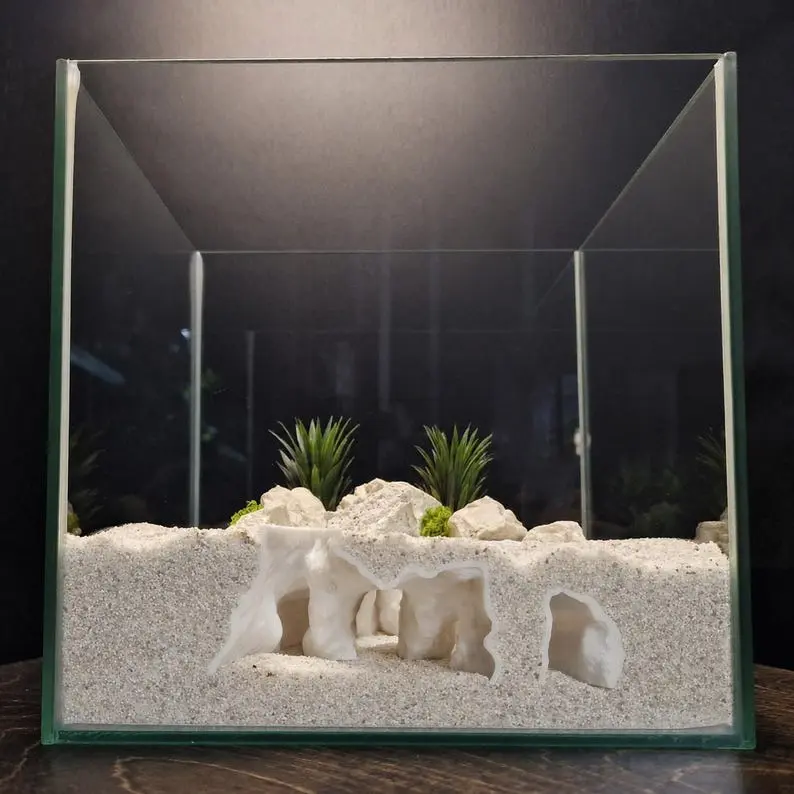
Several smaller shelters let you distribute protected areas between the foreground, plants, and quieter corners. This can create more independent choices than one enclosed chamber and may be easier to adapt as the aquascape grows.
More pieces also create more edges and gaps to maintain. Space them deliberately instead of filling every open patch. Each hide still needs a stable base, clear openings, circulation around the layout, and enough room for the intended animal.
Separate tank zones, more than one independent shelter, and flexible layouts that may change over time.
Cluttered floor space, narrow maintenance gaps, hidden debris, or entrances that face directly into obstacles.
A hybrid layout can do both jobs
One main cave plus a smaller under-gravel or plant-edge shelter can create a focal point without making every animal depend on it. This approach works best when the pieces serve different zones rather than forming one crowded cluster.
Sketch the arrangement or use paper templates before moving hardscape. Check the combined footprint, open swimming area, and the route your hands or tools will need during maintenance.
Use a simple decision checklist
Count the animals that may seek shelter, note whether they tend to use the same zone, and identify how many clearly separate entrances the proposed layout creates. Then compare that plan with the tank's usable floor area and your ability to inspect every space.
Whichever layout you choose, make changes gradually and observe normal behavior. Rework the arrangement if one animal blocks access, if a route becomes too tight, or if debris accumulates in places you cannot maintain.