Quick answer
Start with measurements, then check the route.
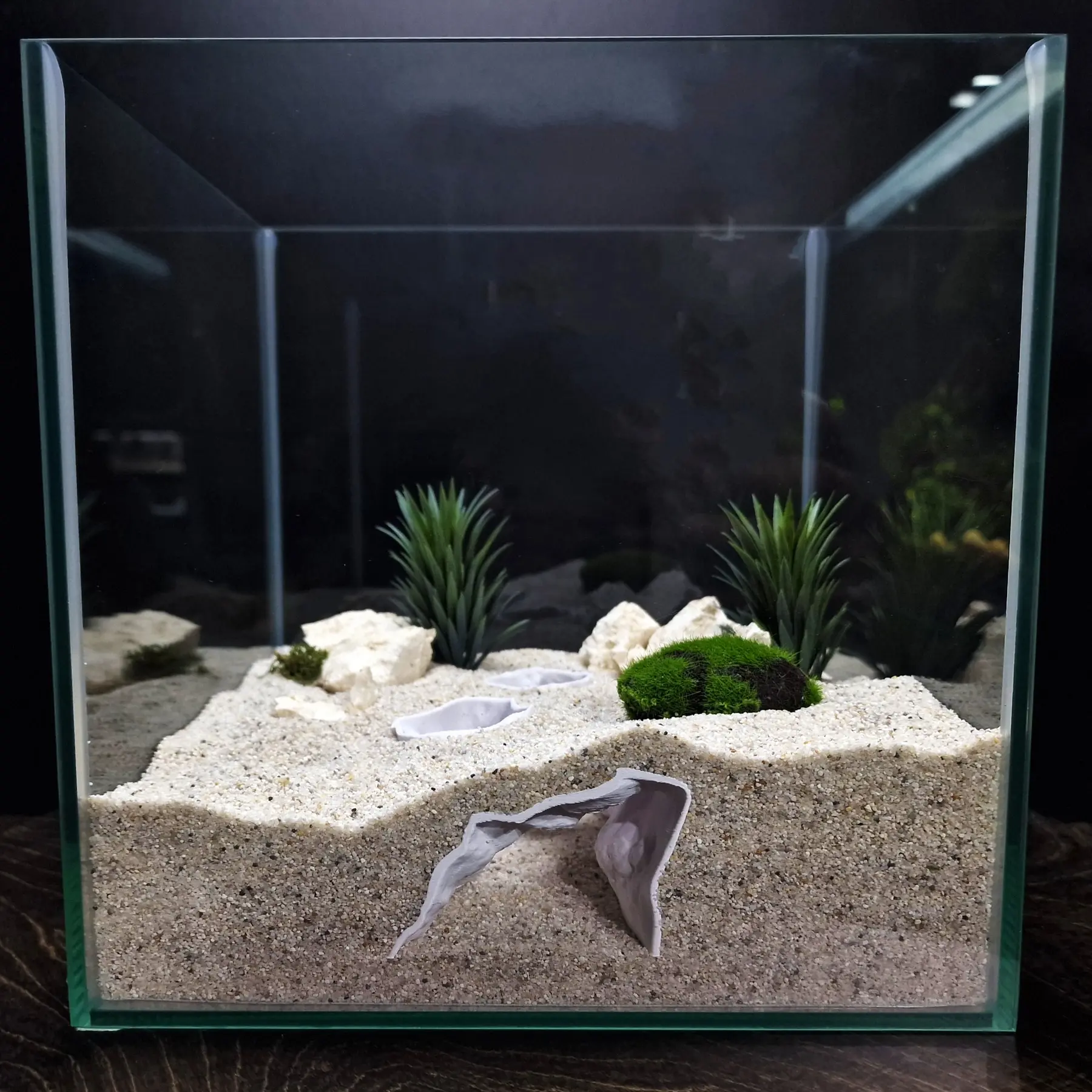
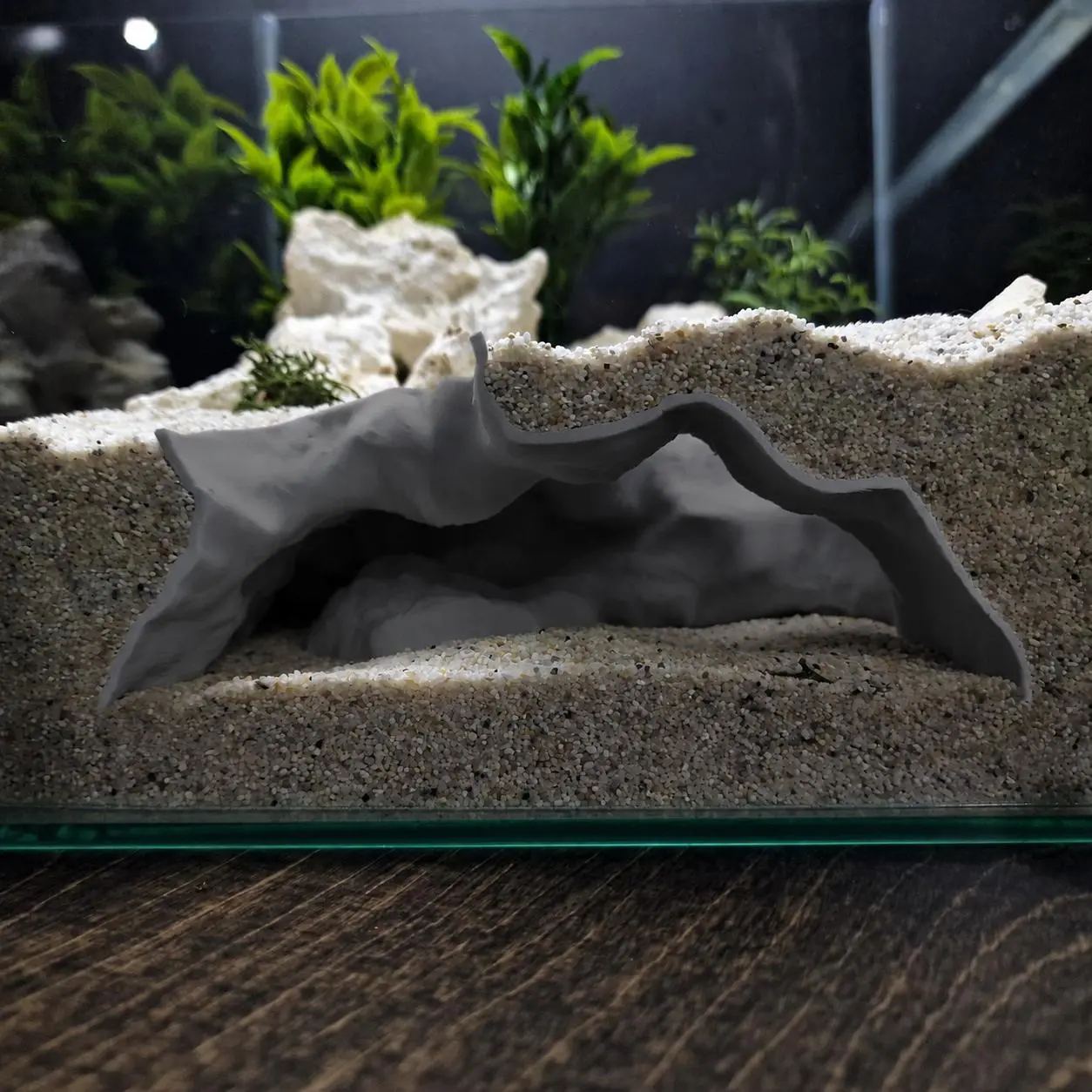
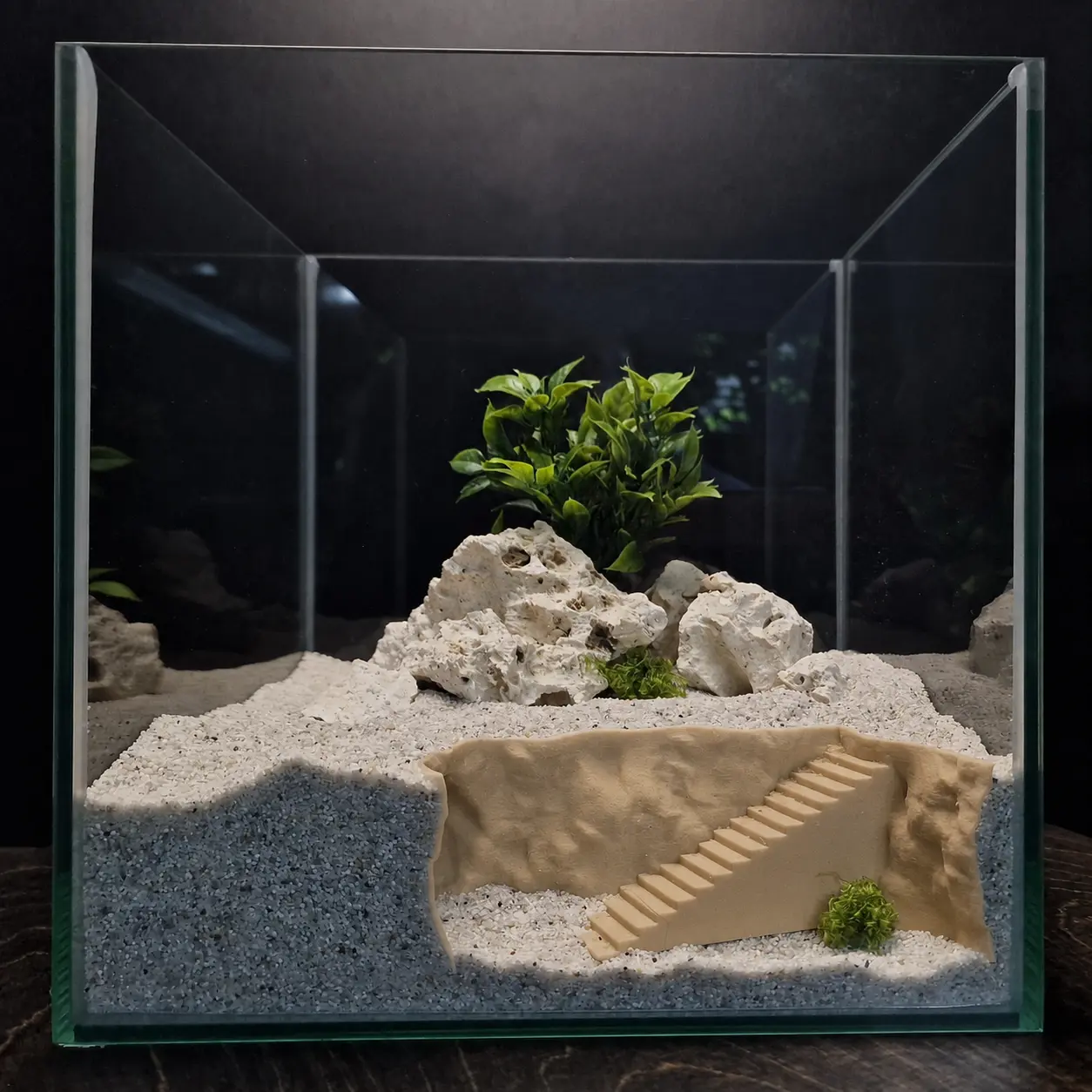
Place the cave securely before shaping the surrounding substrate, keep every intended opening exposed, and make nearby rockwork independently stable. During maintenance, siphon loose debris around the entrances, use clean aquarium water and a soft brush when the removable piece needs rinsing, and never use soap or household cleaners.
Dry-fit the cave before moving substrate
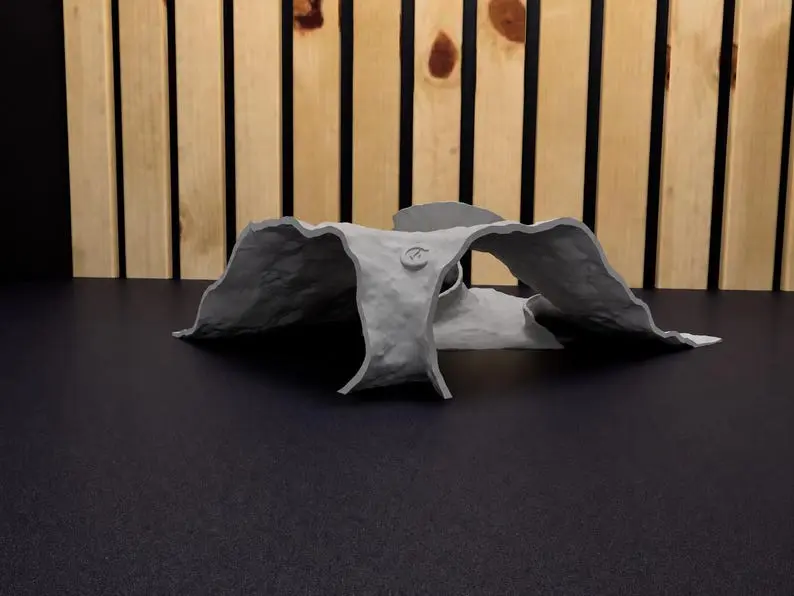
Start with the cave's complete exterior dimensions and the actual clear footprint in the aquarium. Test the position before adding plants, stone, or wood around it. Confirm that the intended entrances face open water rather than glass, equipment, or a hardscape obstacle.
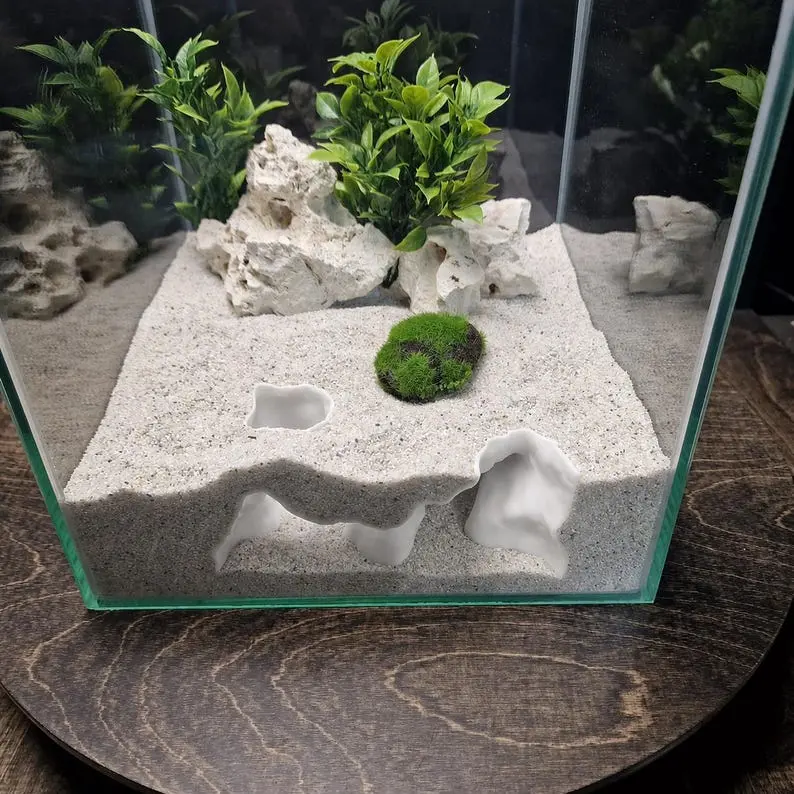
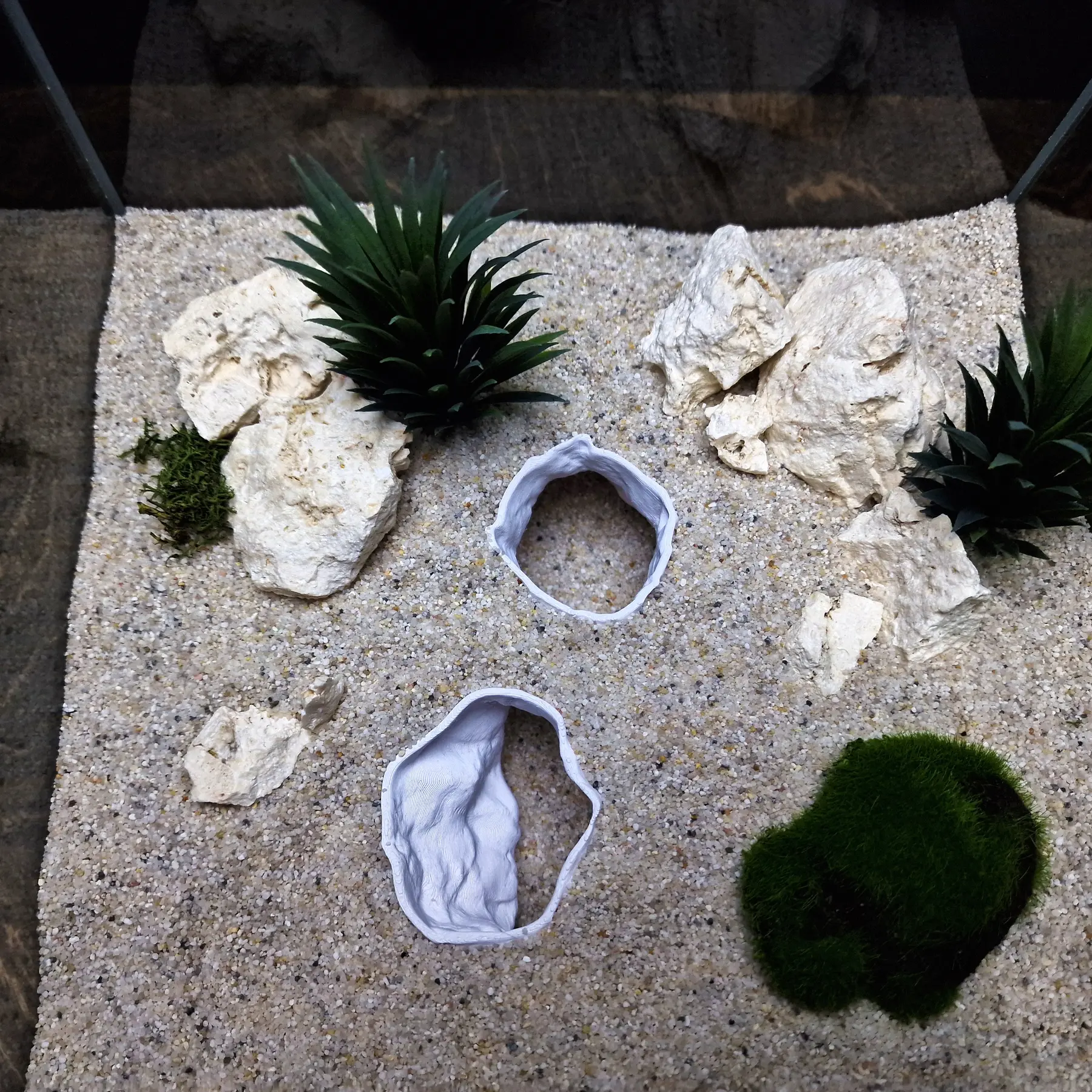
Look from the front, side, and above. An under-gravel cave can disappear visually once covered, so decide in advance how you will inspect each opening and reach the area with a siphon, brush, or feeding tool.
Use the published length, width, and height to make a simple paper template before the cave enters the tank.
Preserve a visible route in and out; an opening that faces a rock or glass panel is not truly clear.
Know which plants or loose decorations would need to move if the cave ever requires a full inspection.
Build from a stable base upward
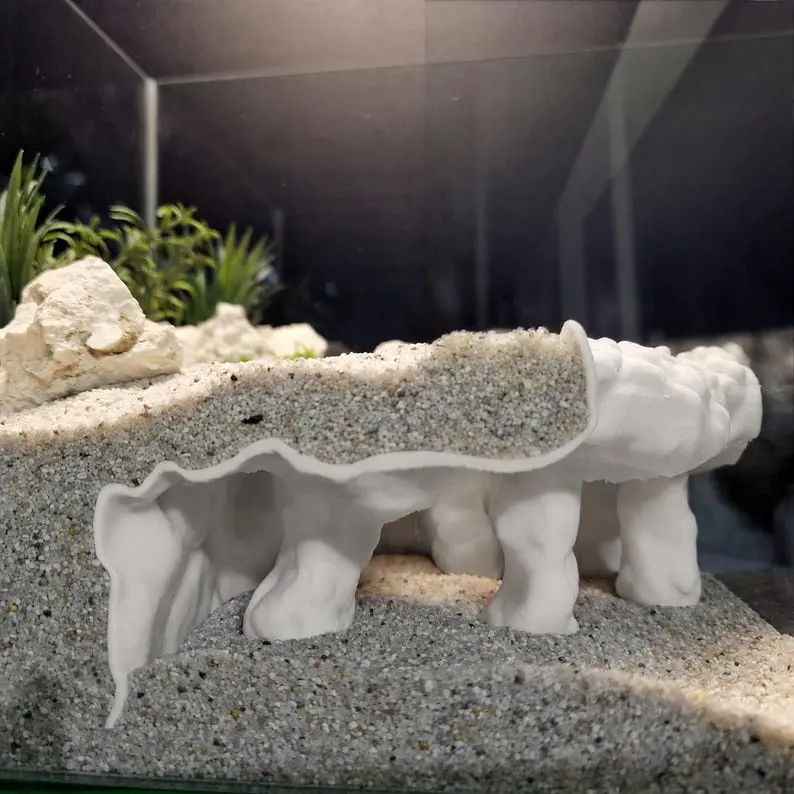
Set the cave on a stable tank floor or established base instead of balancing it on a loose mound. Add sand or fine gravel around the body gradually, keeping the designed entrances and inspection areas open as the substrate settles.
Nearby rocks and wood should support themselves without depending on the cave. Do not create a layout where removing the decoration could cause hardscape to drop, shift, or trap an animal.
Control substrate depth around the openings
Use enough substrate to blend the structure into the landscape without spilling into the intended routes. Sloped sand can move after filling, cleaning, digging, or normal water flow, so recheck the entrance height after the tank has settled.
Avoid packing substrate tightly into narrow exterior gaps that cannot be siphoned. A clean-looking buried edge is useful only when the surrounding area remains accessible for routine care.
Clean the entrances during normal maintenance
During water changes, use a small siphon or other aquarium-safe maintenance tool to remove loose waste near the entrances and along reachable edges. Work gently so the substrate does not collapse into the cave or undermine its base.
Observe how debris moves around the structure. If waste repeatedly collects in an unreachable pocket, adjust the angle, reduce the surrounding obstruction, or choose a more serviceable location rather than allowing the problem to continue.
A clear entrance is easier to inspect for settled substrate, plant growth, and trapped debris.
Move loose material toward the siphon without blasting substrate deeper into a hidden route.
Confirm the cave is still stable and that every intended opening remains unobstructed.
Use clean water for a deeper rinse
If the removable decoration needs a deeper cleaning, rinse it with clean water and use a soft brush for reachable surfaces. Do not use soap, detergent, disinfectant, or household cleaning chemicals.
Return the piece only after inspecting it for damage, rough changes, or sharp edges and rebuilding a stable placement. Recheck the entrances before animals approach the structure again.
Recheck the cave as the aquascape changes
Plants grow, roots spread, sand shifts, and animals may dig. Include the cave in regular visual checks instead of assuming the original installation will remain unchanged.
Remove or reposition the piece if it becomes unstable, damaged, difficult to inspect, repeatedly clogged, or too crowded for normal entry and exit. Long-term maintenance access matters as much as the first-day appearance.